Chapter 1: The Purpose of Accounting
This chapter introduces the purpose of accounting. It explains the difference between book-keeping and accounting, the meaning of financial data, why businesses measure profit or loss, and why interested parties use accounting information.
Topic 1: Book-keeping and accounting
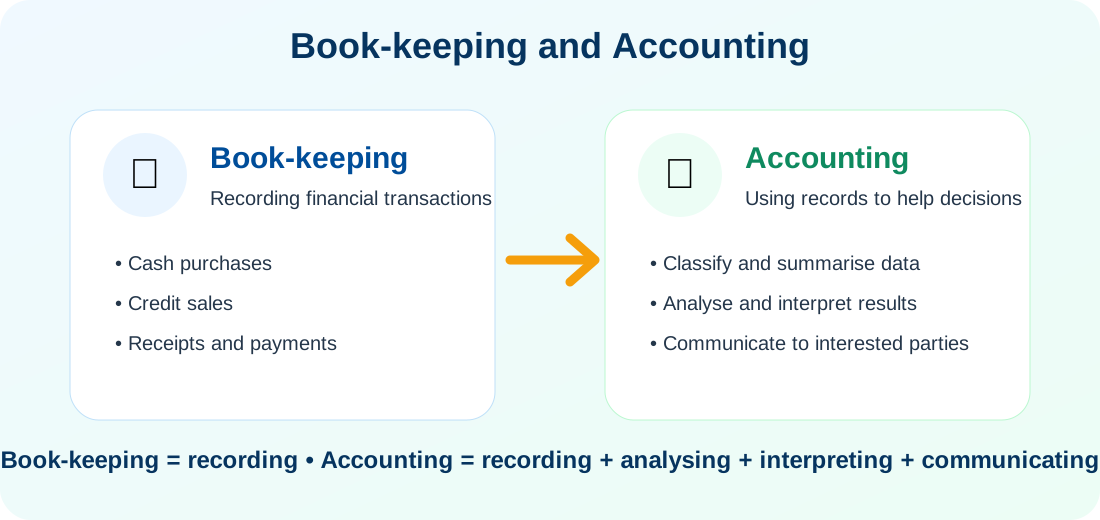
Book-keeping records transactions. Accounting goes further by using records to help people understand performance and make decisions.
1. Book-keeping and Accounting
A shop buys goods for $500 cash. The book-keeper records this transaction.
Accounting is a wider process. It includes:
- collecting and recording financial data
- classifying it
- summarising it
- analysing it
- interpreting it
- communicating it to interested parties
Topic 2: Financial data
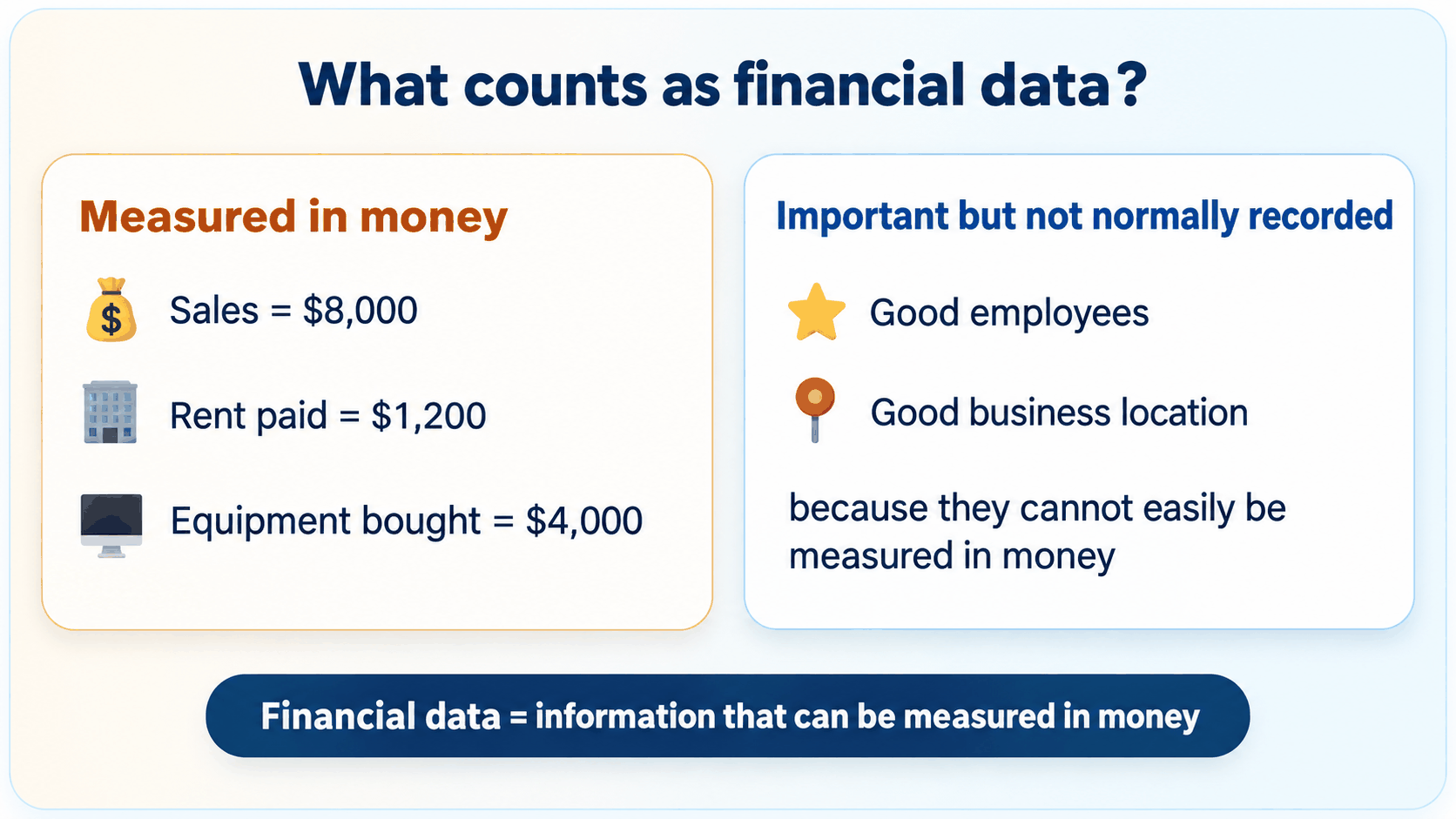
Financial data is information that can be measured in money.
2. Financial Data
Examples
Sales
Sales = $8,000
Rent paid
Rent paid = $1,200
Equipment bought
Equipment bought = $4,000
Topic 3: Purpose of accounting
Accounting provides financial information that helps people monitor performance, make decisions and understand profit, loss, assets and liabilities.
3. Purpose of Accounting
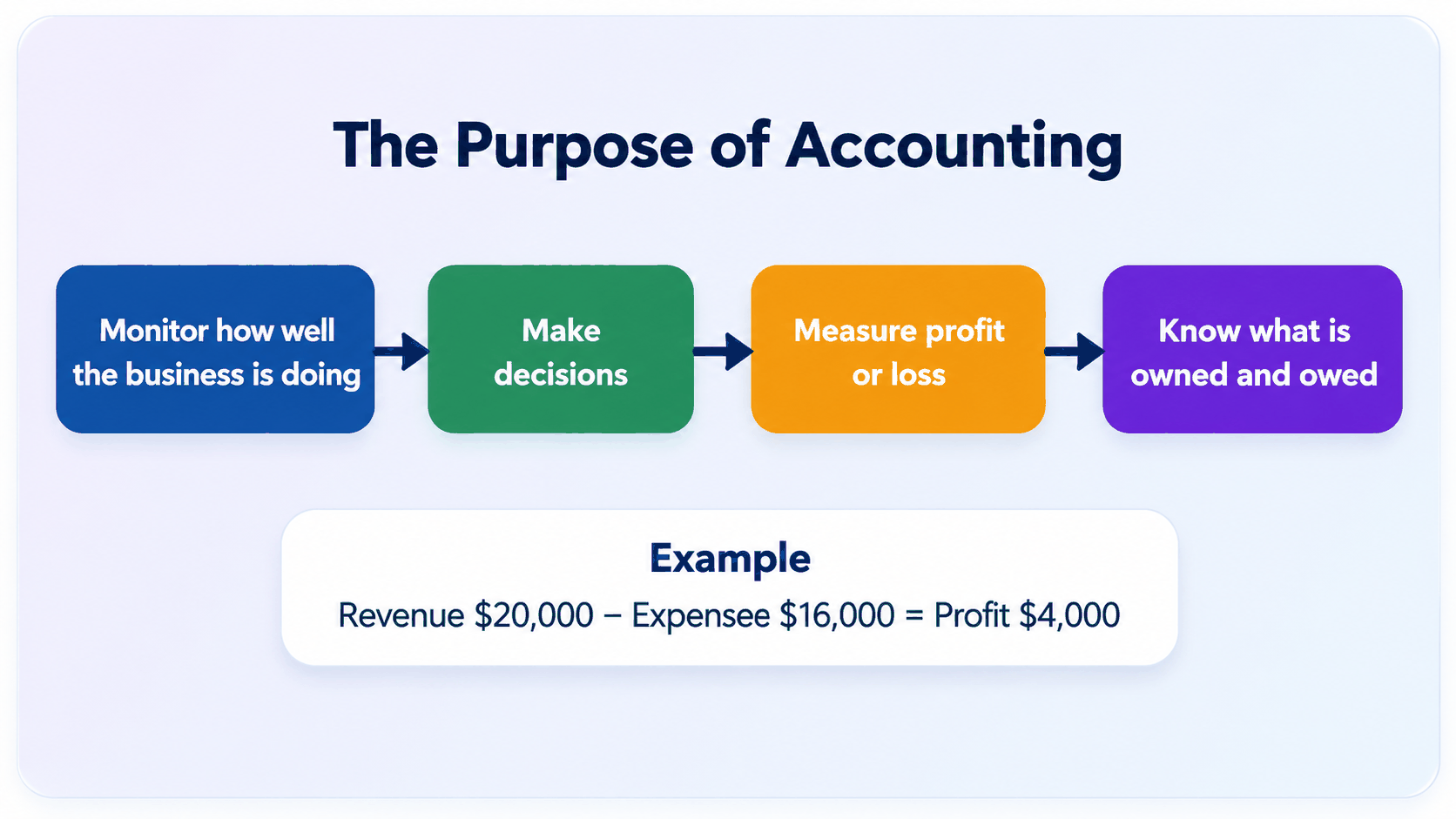
Accounting provides financial information that helps people:
- monitor how well the business is doing
- make decisions
- measure profit or loss
- know what the business owns and owes
A business has:
Revenue = $20,000
Expenses = $16,000
Profit:
$20,000 − $16,000 = $4,000
The owner can compare this $4,000 profit with previous years to see whether the business is improving.
4. Why Measure Profit or Loss?
Businesses measure profit or loss to:
- compare with previous years
- compare with competitors
- identify whether expenses are too high
- decide whether to expand
- take action if the business is making a loss
Last year's profit = $12,000
This year's profit = $8,000
Profit has fallen by $4,000.
The manager may investigate whether expenses increased or sales decreased.
Topic 4: Interested parties
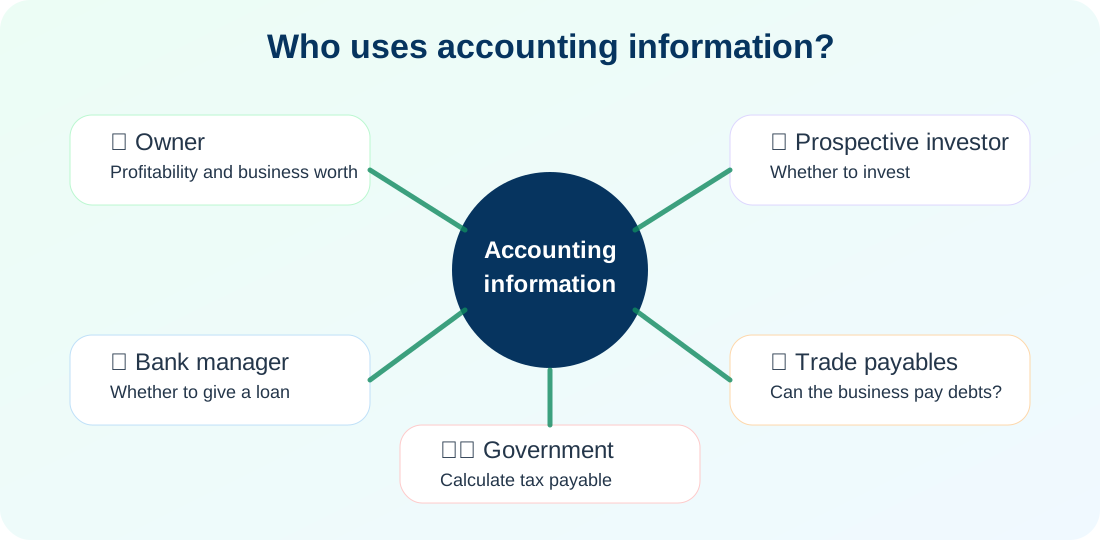
Interested parties are people or organisations that use the accounting information of a business.
5. Interested Parties
| Interested party | Why they need accounting information |
|---|---|
| Owner | To know if the business is profitable and what it is worth. |
| Prospective investor | To decide whether to invest. |
| Bank manager | To decide whether to give a loan. |
| Trade payables | To check whether the business can pay what it owes. |
| Government | To calculate tax payable. |
If a business asks a bank for a $50,000 loan, the bank will examine its accounts to see whether it is likely to repay the loan and interest.
Topic 5: Key terms and remember box
These definitions summarise the most important terms from Chapter 1.
Key Terms
Book-keeping
Recording financial transactions.
Accounting
Recording and using financial information to help make decisions.
Financial data
Information that can be measured in money.
Interested parties
People or organisations interested in the financial information of a business.
Income statement
Shows the profit or loss of a business.
Statement of financial position
Shows the assets, liabilities and financial position of a business.
Book-keeping = recording
Accounting = recording + analysing + interpreting + communicating