Chapter 3: The Double Entry System of Book-keeping
This chapter explains how every transaction is recorded using debits and credits. It links the idea of dual effect to T accounts, ledgers, purchases, sales, returns, balances and ledger divisions.
Topic 1: What is double entry?
Double entry records the two effects of every business transaction.
1. What is Double Entry?
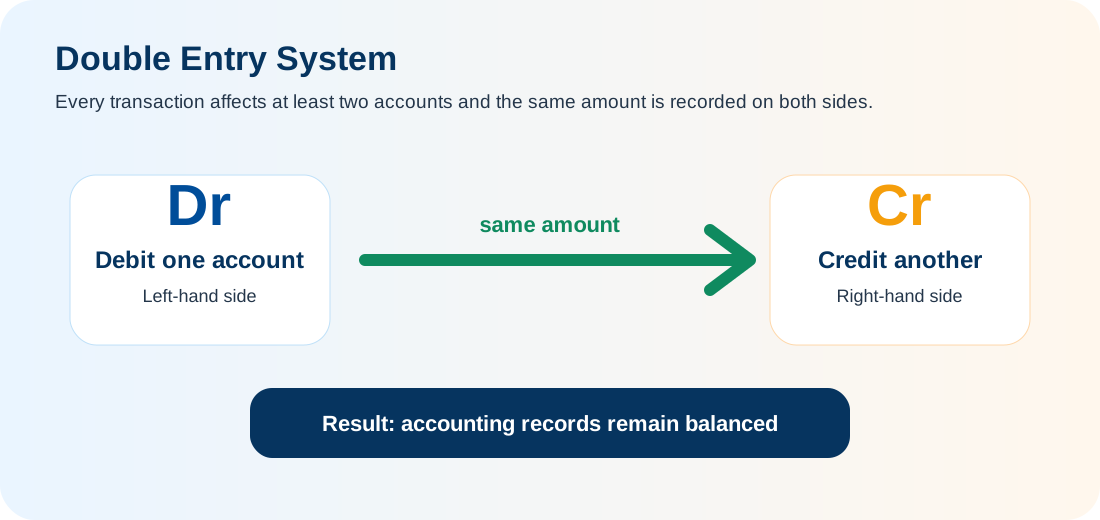
Every business transaction affects at least two accounts.
- one account is debited
- another account is credited
- the amount entered on both sides is the same
This keeps the accounting records balanced.
A business buys a motor vehicle for $8,000 by cheque.
Topic 2: Accounts, ledgers and T accounts
Transactions are posted into accounts, and accounts are grouped together in ledgers.
2. Accounts and Ledgers
Examples:
Bank account
Machinery account
Sales account
Wages account
Ali's account
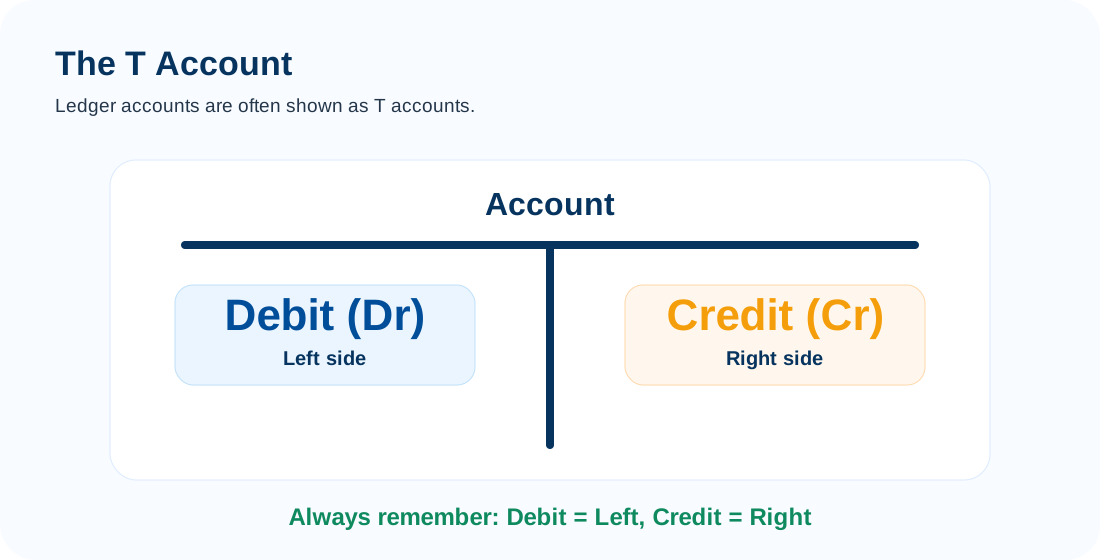
3. The T Account
Ledger accounts are often shown as T accounts.
Topic 3: Main debit and credit rules
This is one of the most important parts of accounting.
4. Main Debit and Credit Rules
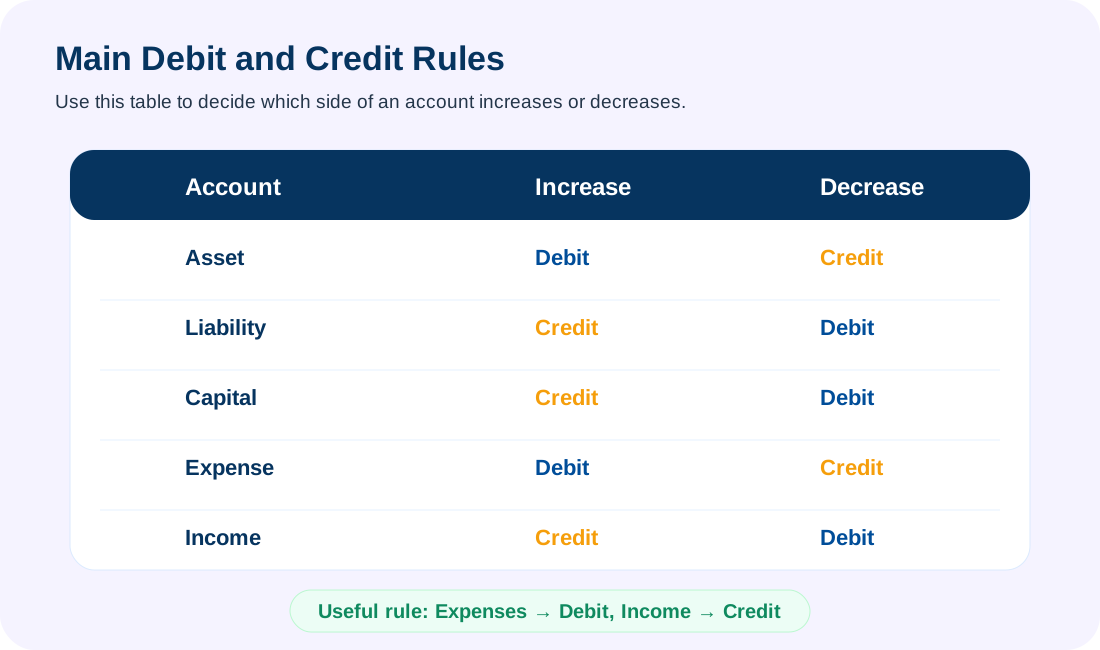
| Account | Increase | Decrease |
|---|---|---|
| Asset | Debit | Credit |
| Liability | Credit | Debit |
| Capital | Credit | Debit |
| Expense | Debit | Credit |
| Income | Credit | Debit |
Topic 4: Common double entries
These examples show how the rules are applied in typical transactions.
5. Common Double Entries
Owner starts business with $20,000 in the bank
- Bank increases → Debit
- Capital increases → Credit
Buy machinery for $5,000 by cheque
- Machinery increases → Debit
- Bank decreases → Credit
Buy furniture for $2,000 on credit from Ahmed Ltd
- Furniture increases → Debit
- Amount owed to Ahmed Ltd increases → Credit
Pay Ahmed Ltd $2,000 by cheque
- Liability decreases → Debit
- Bank decreases → Credit
Owner withdraws $500 from the bank for personal use
Topic 5: Expenses and income
Expenses are debited, while income is credited.
6. Expenses and Income
Paying an expense
Business pays wages of $1,200 by cheque.
Receiving income
Business receives rent of $800 cash.
The chapter applies this rule to items such as salaries, insurance, motor expenses, interest received and rent received.
Topic 6: Purchases, sales and returns
Purchases and sales have a specific accounting meaning: goods bought for resale and goods sold.
7. Purchases
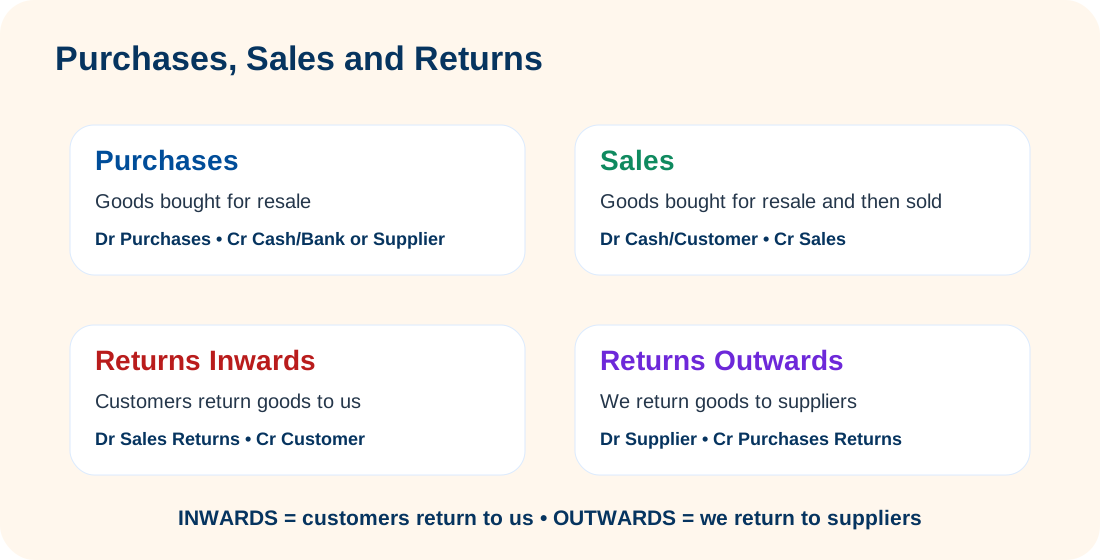
A clothes shop buys clothes costing $3,000 for resale by cheque.
If a clothes shop buys a delivery van for $10,000:
❌ Do not debit Purchases.
✓ Dr Motor Vehicle $10,000
✓ Cr Bank $10,000
8. Sales
Cash sale of $2,500
Credit sale of $1,000 to Ali
9. Returns
There are two types of returns.
Sales Returns / Returns Inwards
Goods are returned by a customer to the business.
Example: Ali returns goods worth $200.
The amount Ali owes the business decreases.
Purchases Returns / Returns Outwards
The business returns goods to a supplier.
Example: Goods worth $300 are returned to ABC Traders.
The amount owed to ABC Traders decreases.
Returns OUTWARDS = we return to suppliers
Topic 7: Balancing ledger accounts
Ledger accounts are balanced at the end of an accounting period.
10. Balancing Ledger Accounts
At the end of an accounting period, ledger accounts are balanced.
A customer's account shows:
- Credit sales = $5,000
- Customer paid = $3,500
The $1,500 is carried down as: Balance c/d = $1,500
It is then brought into the next accounting period as: Balance b/d = $1,500
11. Debit and Credit Balances
Debit balance
If the debit side is greater than the credit side, the account has a debit balance.
A customer's debit balance normally means: The customer owes the business money.
It becomes part of trade receivables.
Credit balance
If the credit side is greater, there is a credit balance.
A supplier's credit balance normally means: The business owes the supplier money.
It becomes part of trade payables.
Topic 8: Divisions of the ledger
Large businesses organise accounts by separating customer, supplier and general accounts.
12. Divisions of the Ledger
As a business grows, its ledger is divided into three sections.
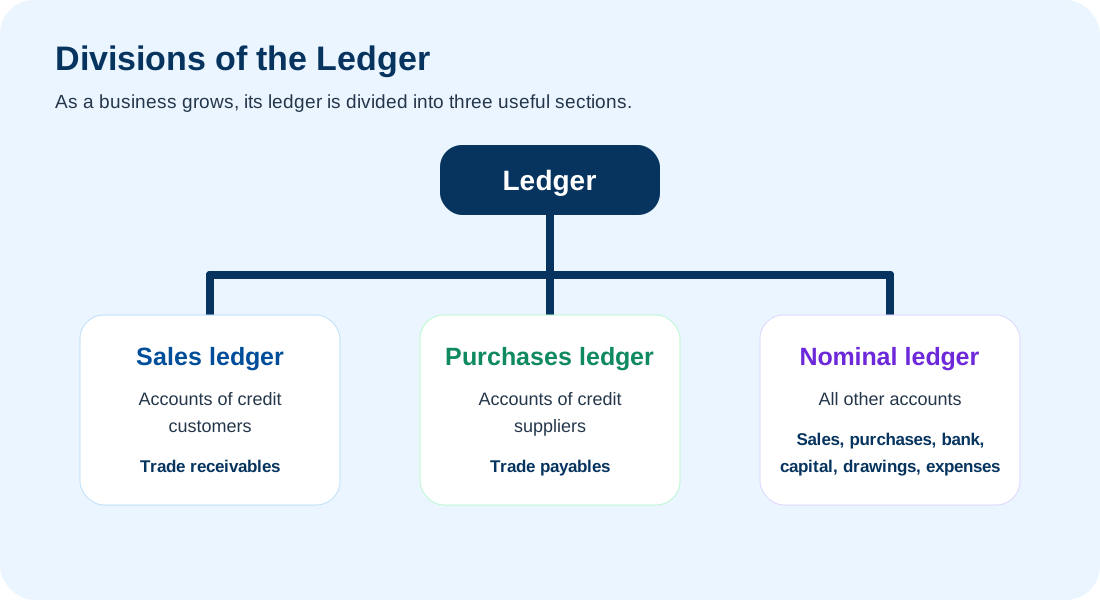
| Ledger | Accounts kept in it |
|---|---|
| Sales ledger | Accounts of credit customers |
| Purchases ledger | Accounts of credit suppliers |
| Nominal (general) ledger | All other accounts |
Sales Ledger
Contains individual accounts of trade receivables.
Example: a customer named Ahmed who buys on credit.
Purchases Ledger
Contains individual accounts of trade payables.
Example: a supplier named ABC Ltd.
Nominal (General) Ledger
Contains accounts such as:
- Sales
- Purchases
- Bank
- Machinery
- Capital
- Drawings
- Expenses
- Income
- Returns
Topic 9: Key terms and rule table
These definitions and entries are the main revision points for Chapter 3.
Key Terms
Double entry
Recording every transaction in at least two accounts.
Debit
Left-hand side of an account.
Credit
Right-hand side of an account.
Ledger
A book containing accounts.
Posting
Transferring entries into ledger accounts.
Purchases
Goods bought for resale.
Sales
Goods bought for resale and then sold.
Sales returns
Goods returned by customers.
Purchases returns
Goods returned to suppliers.
Remember These Rules
| Transaction | Debit | Credit |
|---|---|---|
| Owner introduces cash | Bank | Capital |
| Buy asset by cheque | Asset | Bank |
| Buy goods for resale by cheque | Purchases | Bank |
| Buy goods on credit | Purchases | Supplier |
| Sell goods for cash | Cash | Sales |
| Sell goods on credit | Customer | Sales |
| Pay an expense | Expense | Cash/Bank |
| Receive income | Cash/Bank | Income |
| Customer returns goods | Sales Returns | Customer |
| Return goods to supplier | Supplier | Purchases Returns |
| Owner takes cash for personal use | Drawings | Cash/Bank |