The Trial Balance
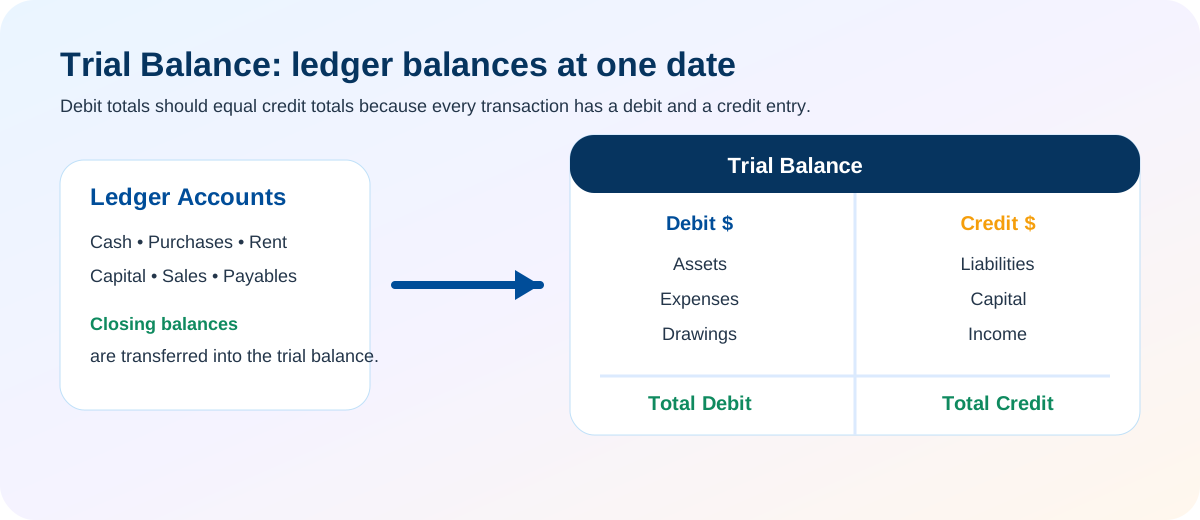
A trial balance lists ledger account balances on a particular date. This chapter explains why debit totals should equal credit totals, how to place balances correctly, why a balanced trial balance is not complete proof of accuracy, and which errors are or are not revealed.
Topic 1: What a trial balance is and why it is used
The trial balance brings ledger balances together so the arithmetical accuracy of the accounts can be checked.
1. What is a Trial Balance?
It has two columns:
- Debit
- Credit
The total debit balances should equal the total credit balances because every transaction has a debit and a credit entry.
2. Uses of a Trial Balance
A trial balance is prepared to:
- check the arithmetical accuracy of the accounting records
- help locate some errors
- provide balances needed to prepare the income statement
- provide balances needed to prepare the statement of financial position
3. Limitation of a Trial Balance
A trial balance may balance even when errors exist.
Some errors affect both debit and credit equally and therefore do not disturb the totals.
Topic 2: Preparing a trial balance
To prepare a trial balance, each ledger closing balance is placed into the correct debit or credit column.
4. Preparing a Trial Balance
The closing balance of each ledger account is entered into either the debit or credit column.
Main rule
| Normally Debit Balances | Normally Credit Balances |
|---|---|
| Assets | Liabilities |
| Expenses | Capital |
| Purchases | Sales/Income |
| Drawings | Purchases returns |
| Sales returns | — |
A business has:
• Cash $2,000
• Purchases $5,000
• Rent $1,000
• Capital $4,000
• Sales $3,000
• Trade payables $1,000
| Account | Debit $ | Credit $ |
|---|---|---|
| Cash | 2,000 | |
| Purchases | 5,000 | |
| Rent | 1,000 | |
| Capital | 4,000 | |
| Sales | 3,000 | |
| Trade payables | 1,000 | |
| Total | 8,000 | 8,000 |
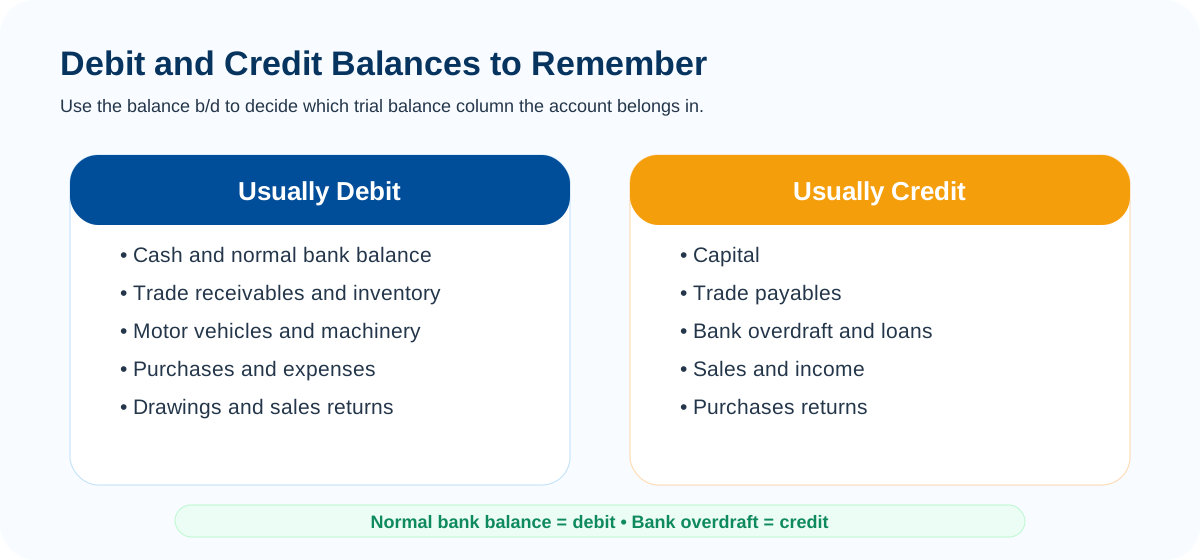
5. Debit and Credit Balances to Remember
Usually Debit
- Cash
- Bank balance
- Trade receivables
- Inventory
- Motor vehicles
- Machinery
- Purchases
- Expenses
- Drawings
- Sales returns
Usually Credit
- Capital
- Trade payables
- Bank overdraft
- Loans
- Sales
- Income
- Purchases returns
6. Opening Inventory and Closing Inventory
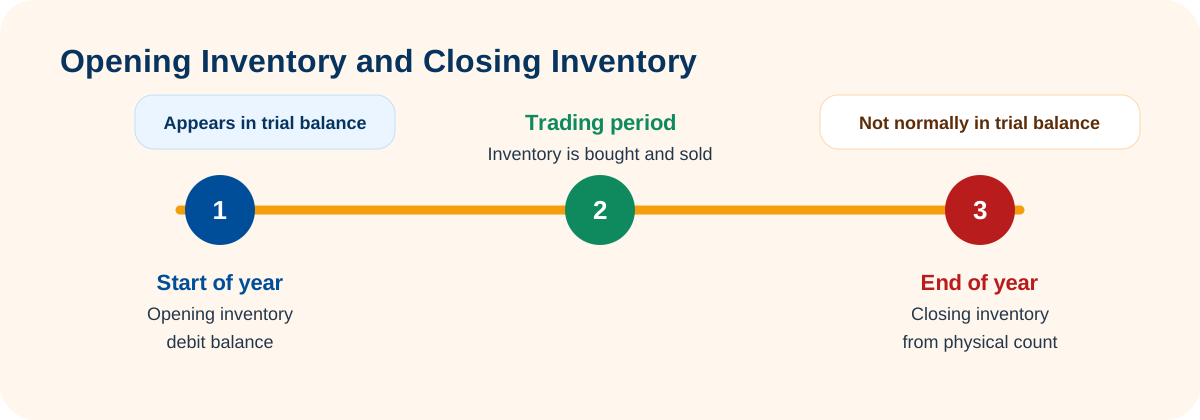
Opening Inventory
Opening inventory is the inventory held at the beginning of the financial year.
It is last year's closing inventory and has a debit balance.
Therefore, opening inventory normally appears in the trial balance.
Closing Inventory
Closing inventory is inventory that remains unsold at the end of the financial year.
Closing inventory is normally obtained by physically counting the unsold inventory.
Important: Closing inventory is not normally included in the trial balance because it has not yet been entered into the ledger accounts.
Goods available = $20,000
Goods sold cost = $16,000
Closing inventory:
$20,000 − $16,000 = $4,000
Topic 3: Trial balance errors
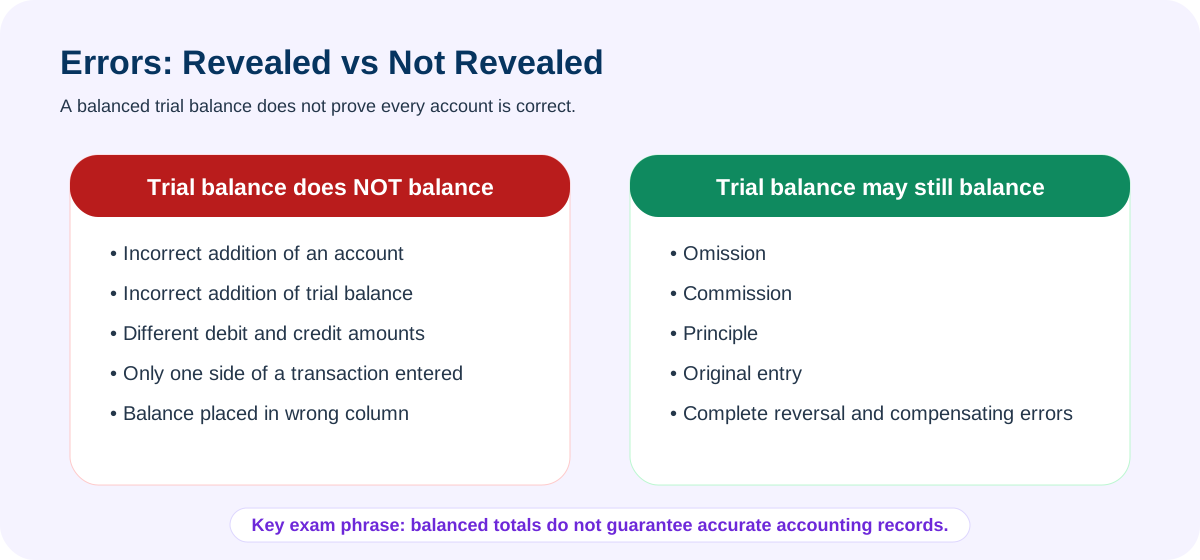
Some errors stop the trial balance from balancing, while others remain hidden even when the totals agree.
7. Errors that Cause the Trial Balance Not to Balance
Examples include:
- incorrect addition of an account
- incorrect addition of the trial balance
- entering different amounts for the debit and credit entries
- recording only one side of a transaction
- putting an account balance in the wrong column
Equipment bought for $500:
Correct:
Dr Equipment $500
Cr Bank $500
But if only Equipment is debited and Bank is not credited, the trial balance will differ by $500.
8. Errors Not Revealed by the Trial Balance
These are especially important for examinations.
9. Quick Table of Errors
| Error | Trial balance still balances? |
|---|---|
| Omission | Yes |
| Commission | Yes |
| Principle | Yes |
| Original entry | Yes |
| Complete reversal | Yes |
| Compensating | Yes |
| Only one side recorded | No |
| Different debit and credit amounts | No |
| Incorrect addition | No |
Topic 4: Finding errors and final revision
When debit and credit totals disagree, work systematically through the records.
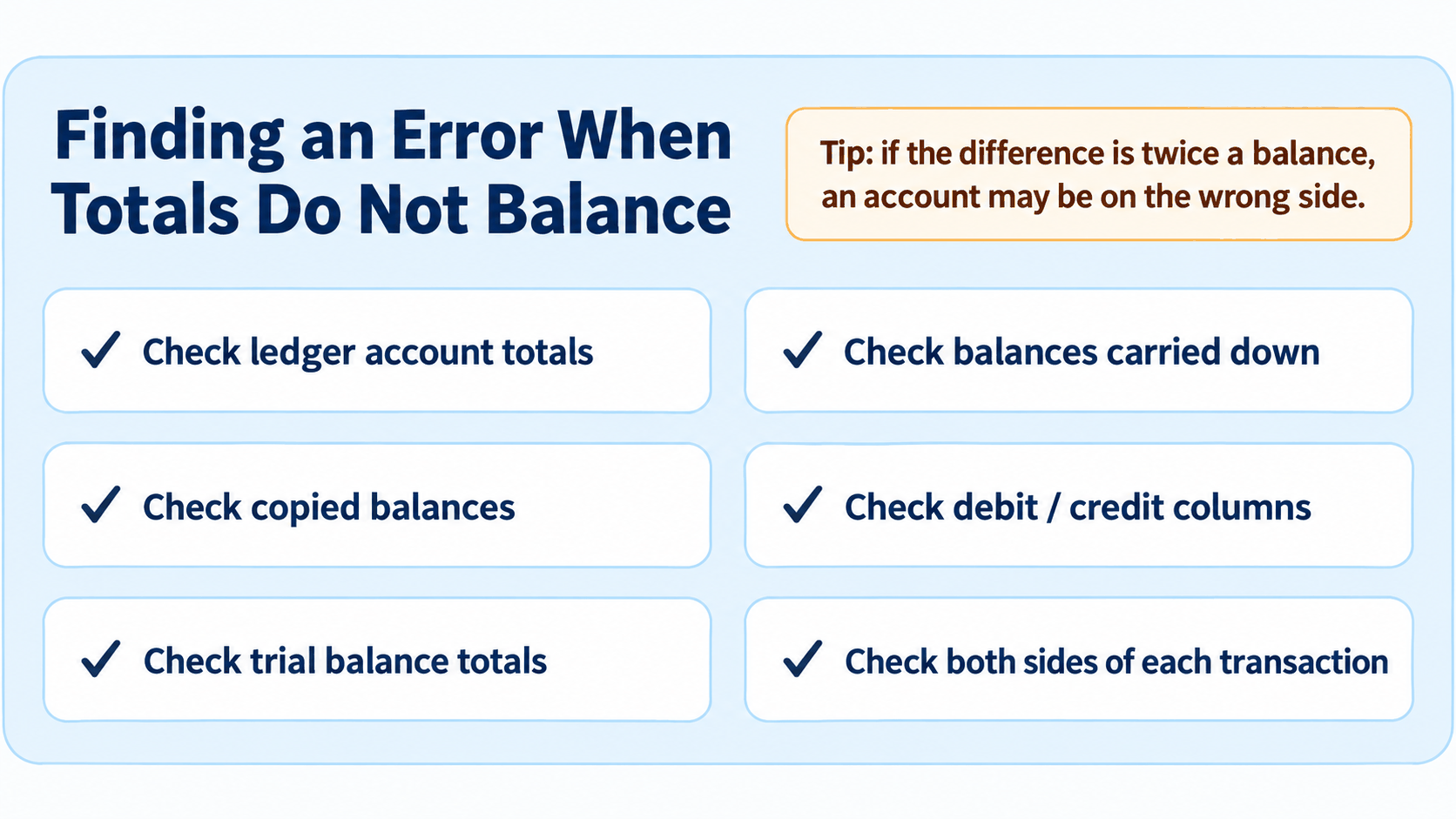
10. Finding an Error When the Trial Balance Does Not Balance
Check:
- ledger account totals
- balances carried down
- whether balances were copied correctly
- whether balances were placed in the correct debit/credit column
- trial balance totals
- whether both sides of every transaction were entered
Key Terms
Trial balance
Statement of ledger balances in debit and credit columns.
Opening inventory
Inventory at the start of the financial year.
Closing inventory
Unsold inventory at the end of the financial year.
Error of omission
Transaction completely omitted.
Error of commission
Correct amount entered in the wrong account of the same class.
Error of principle
Entry made in the wrong type of account.
Error of original entry
Wrong amount entered in both accounts.
Complete reversal
Debit and credit entries completely reversed.
Compensating errors
Two or more errors cancel each other.