Correction of Errors
Accounting errors can be found after transactions have already been recorded. This chapter shows how to correct them using journal entries, ledger postings, suspense accounts and corrected profit statements.
Topic 1: Error correction basics
Start by understanding why errors are corrected and the basic method used in journal entries.
1. Why are Accounting Errors Corrected?
Errors may be discovered after transactions have already been recorded.
They are normally corrected by:
- preparing a journal entry
- posting the correction to the relevant ledger accounts
There are two broad groups:
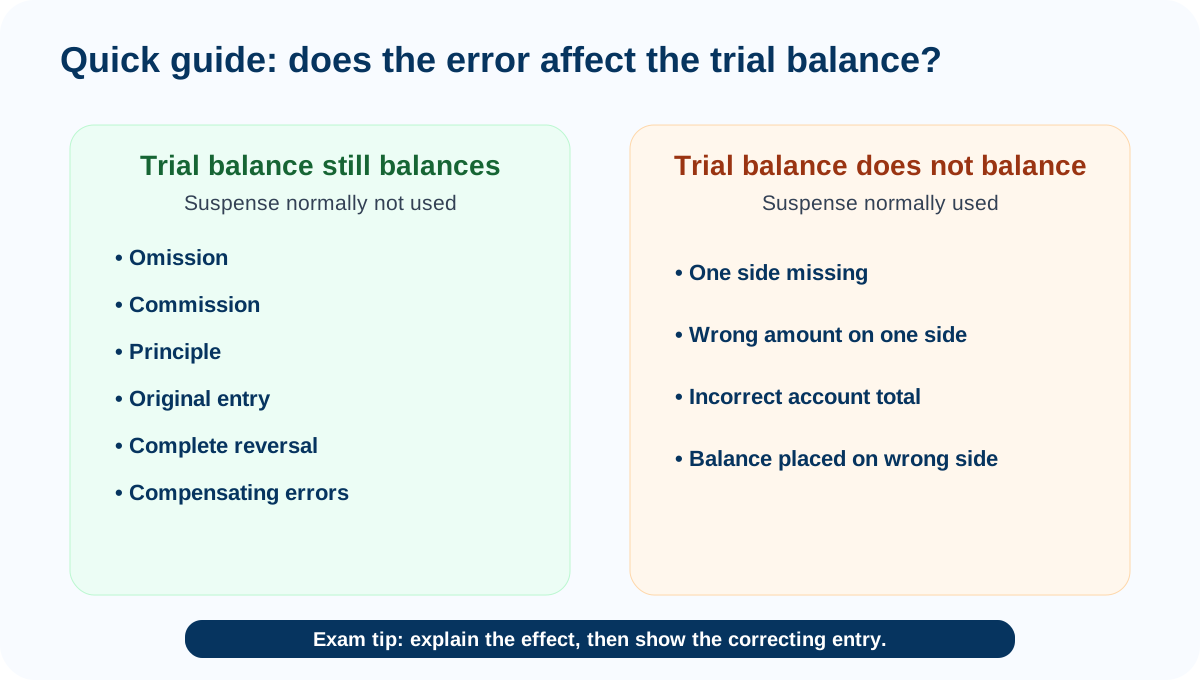
Errors that affect the trial balance
These cause the debit and credit totals to disagree, so a suspense account may be needed.
Errors that do not affect the trial balance
These still leave debit and credit totals equal, but the accounting records are still wrong.
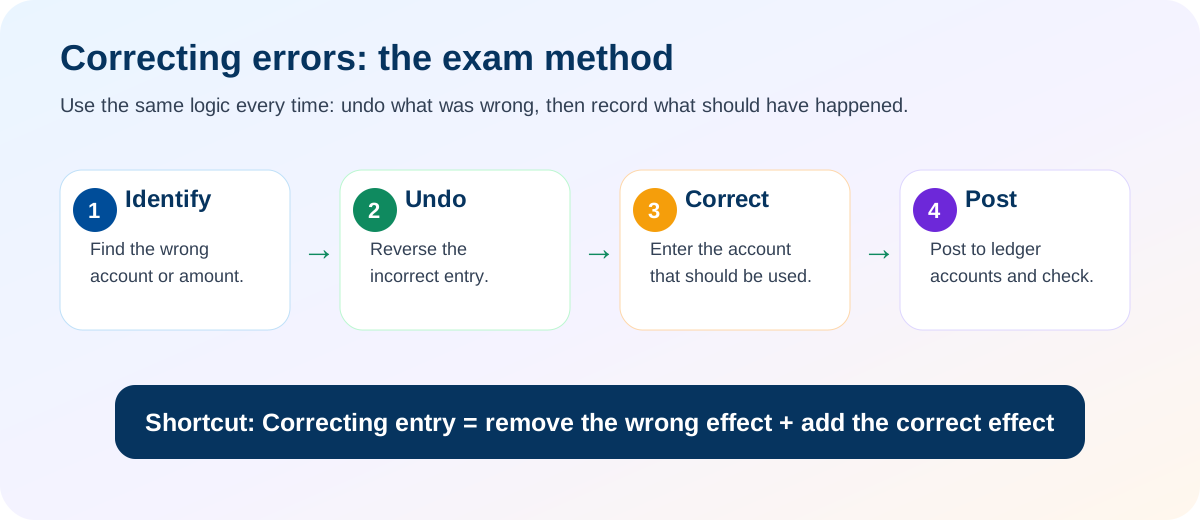
2. Correcting Errors – Basic Rule
Repairs to a motor vehicle of $200 were wrongly debited to Motor Vehicles.
Wrong:
Dr Motor Vehicles $200
Correct account should have been Motor Vehicle Repairs.
Correction:
Dr Motor Vehicle Repairs $200
Cr Motor Vehicles $200
The credit removes the incorrect debit, while the debit records the expense correctly.
Topic 2: Errors that do not affect the trial balance
These errors normally do not need a suspense account because the debit and credit sides were affected equally.
3. Correcting Errors that Do Not Affect the Trial Balance
4. Overcast and Undercast
Overcast
Overcast means a total is too high.
Example: Correct sales total = $8,000. Recorded sales total = $8,500. Sales are overcast by $500.
Undercast
Undercast means a total is too low.
Example: If recorded as $7,600, sales are undercast by $400.
Topic 3: Suspense account corrections
Use suspense only for errors that make the trial balance totals disagree.
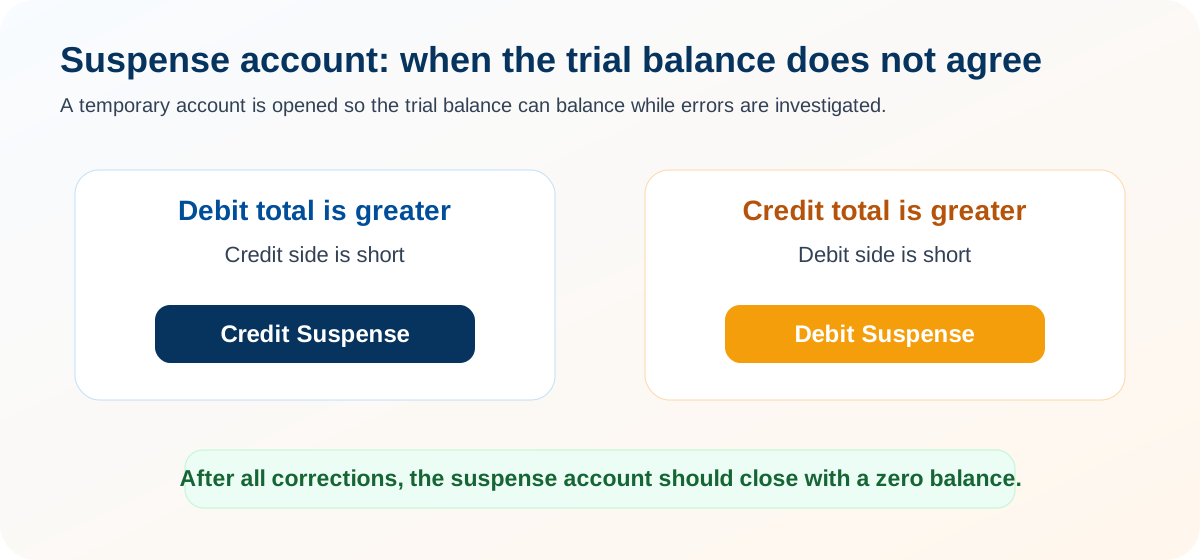
5. Suspense Account
It allows the trial balance to balance temporarily while the errors are investigated.
Trial balance:
Debit total = $20,000
Credit total = $19,500
Difference:
$20,000 − $19,500 = $500
The credit side is short, so: Credit Suspense Account $500.
Rule 1
Debit total greater than credit → Credit suspense
Rule 2
Credit total greater than debit → Debit suspense
6. Which Errors Use the Suspense Account?
The suspense account is used for errors that cause the trial balance not to agree.
Examples:
- only one side of a transaction was recorded
- incorrect addition of an account
- different amounts entered for debit and credit
- an account balance placed on the wrong side
The Sales account should have been credited with $700, but no credit entry was made.
7. Correcting an Error Using Suspense
Suppose Purchases were undercast by $200.
Purchases should increase, so:
The textbook uses the same principle when correcting undercast purchases, sales and rent accounts.
Topic 4: Effect of errors on profit and statements
Corrections may change gross profit, profit for the year and statement of financial position figures.
8. Effect of Errors on Profit
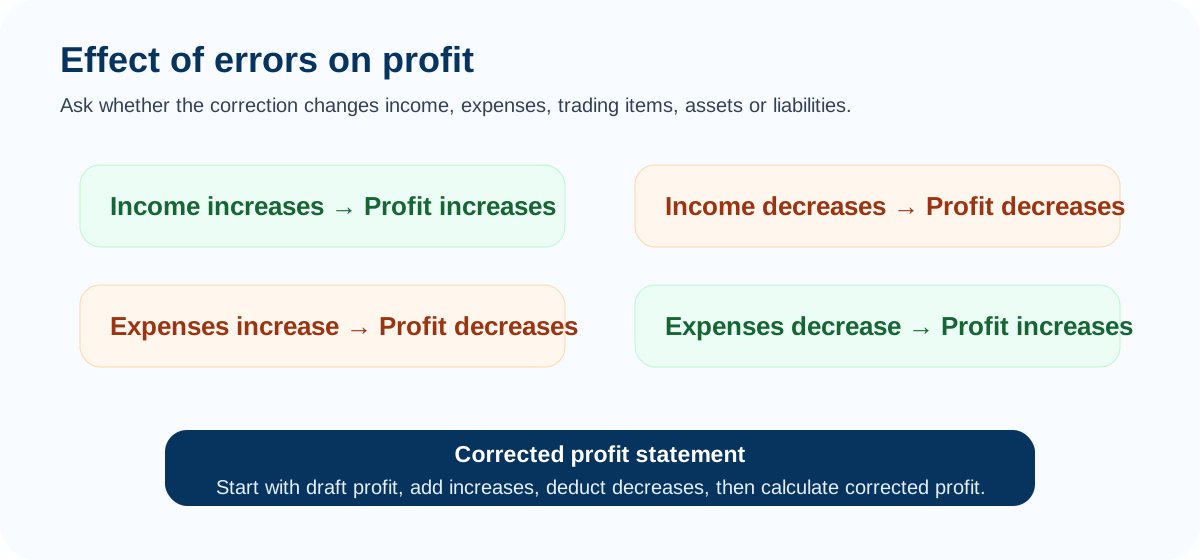
After errors are corrected, the profit may also need correcting.
Simple Rules
Example 1 – Sales understated
Sales were understated by $500. Correcting sales increases income by $500. Therefore, profit increases by $500.
Example 2 – Expense understated
Rent expense should be $2,000, but only $1,700 was recorded. Rent understated = $300. Correcting the expense means profit decreases by $300.
Example 3 – Purchases overstated
Purchases were overstated by $400. Correcting purchases reduces expenses/cost. Therefore, profit increases by $400.
9. Corrected Profit Statement
Suppose draft profit is $10,000.
Errors discovered:
- Sales understated $800
- Wages understated $300
- Rent received omitted $200
| Correction | $ |
|---|---|
| Draft profit | 10,000 |
| Add: Sales understated | 800 |
| Add: Rent received omitted | 200 |
| Less: Wages understated | (300) |
| Corrected profit | 10,700 |
10. Gross Profit and Profit for the Year
Sales, purchases and trading account items
Errors involving sales, purchases and trading account items can affect both gross profit and profit for the year.
Expenses and other income
Errors involving expenses and other income normally affect only profit for the year.
Assets and liabilities only
Errors affecting only assets or liabilities may have no effect on profit.
11. Effect on the Statement of Financial Position
Corrections may also change:
- Assets
- Liabilities
- Capital
Corrected profit also affects capital.
Trade payables shown = $5,000.
It is discovered that a payment of $800 to a supplier was not entered in the supplier's account.
Correct trade payables:
$5,000 − $800 = $4,200
So the statement of financial position must be corrected.
Similarly, if the Bank account, Trade Receivables, Trade Payables or Capital accounts contain errors, their figures must be adjusted.
Topic 5: Quick exam revision
Use these tables to decide whether suspense is needed and how to explain the correction.
12. Quick Error Guide
| Error | Trial Balance affected? | Suspense normally used? |
|---|---|---|
| Omission | No | No |
| Commission | No | No |
| Principle | No | No |
| Original entry | No | No |
| Complete reversal | No | No |
| Compensating | No | No |
| One side missing | Yes | Yes |
| Wrong amount on one side | Yes | Yes |
| Incorrect account total | Yes | Yes |
Key Terms
Suspense account
Temporary account used when trial balance totals do not agree.
Overcast
Total is greater than the correct amount.
Undercast
Total is less than the correct amount.
Corrected profit
Profit after the effects of accounting errors have been corrected.