Partnerships
This chapter explains partnership accounts, including partnership agreements, profit-sharing ratios, the profit and loss appropriation account, interest on capital, partners’ salaries, interest on drawings, partner’s loans, current accounts, fixed capital accounts, fluctuating capital accounts and the partnership statement of financial position.
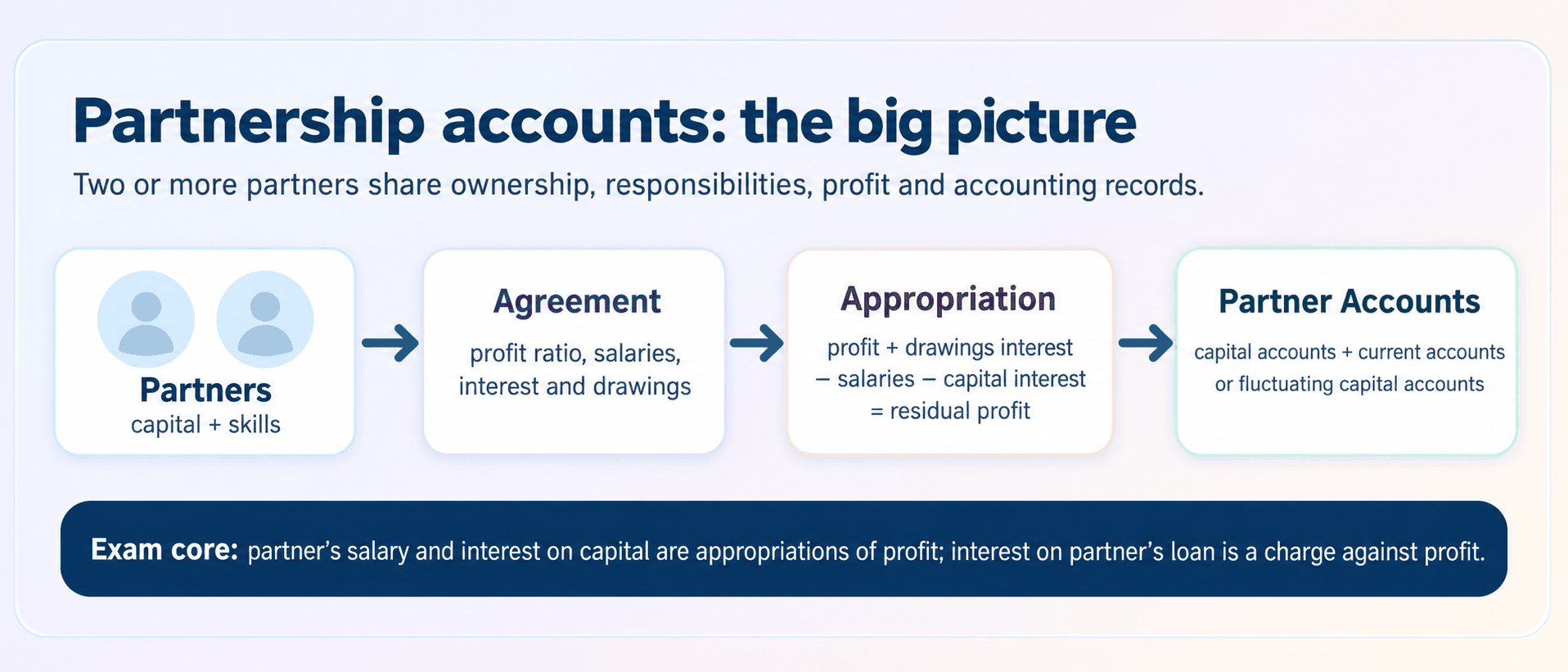
Topic 1: Partnership Basics and Agreement
A partnership has more than one owner, so accounting must show how profit, capital, drawings and responsibilities are shared.
1. What is a Partnership?
Partnerships are common among:
- Doctors
- Lawyers
- Accountants
- Family businesses
2. Advantages and Disadvantages
- More capital can be raised.
- Partners can bring different skills and experience.
- Responsibilities are shared.
- Risks and losses are shared.
- More ideas may improve decision-making.
- Easy and relatively inexpensive to establish.
- Profits must be shared.
- Partners may disagree.
- Decisions may take longer.
- Ordinary partners normally have unlimited liability.
- A partner may be liable for actions taken by another partner on behalf of the business.
3. Partnership Agreement
A partnership agreement is a contract between the partners explaining how the partnership will operate. It helps prevent disagreements.
| Important contents | Why it matters |
|---|---|
| Amount of capital contributed by each partner | Shows how much each partner has invested. |
| Profit and loss sharing ratio | Shows how profits and losses are divided. |
| Limits on drawings | Controls how much partners may withdraw. |
| Interest on capital | Rewards partners for capital invested. |
| Interest on drawings | Discourages excessive withdrawals. |
| Interest on partners’ loans | Sets the return on money lent to the partnership. |
| Partners’ salaries | Rewards partners for extra work or responsibility. |
4. Profit-Sharing Ratio
Partners do not necessarily share profits equally. The partnership agreement states the profit-sharing ratio.
Ali and Omar share profits 2:1.
Residual profit = $30,000
Ali receives: 2/3 × $30,000 = $20,000
Omar receives: 1/3 × $30,000 = $10,000
Topic 2: Profit and Loss Appropriation Account
The appropriation account starts with profit for the year and shows how that profit is distributed between the partners.
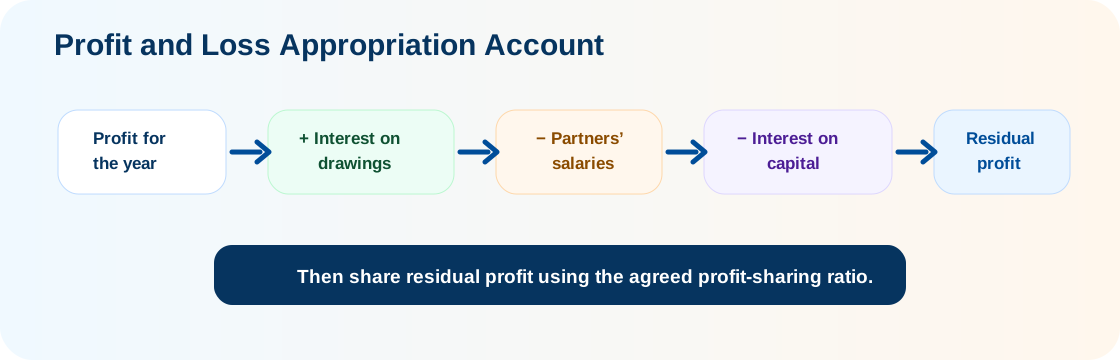
5. Profit and Loss Appropriation Account
A partnership prepares the normal income statement, but then also prepares a Profit and Loss Appropriation Account.
6. Interest on Capital
Interest on capital rewards partners for the money they have invested in the business.
Ali’s capital = $40,000
Interest on capital = 5%
Interest = $40,000 × 5% = $2,000
Appropriation account
The $2,000 is deducted in the appropriation account.
Current account
The $2,000 is credited to Ali’s current account.
7. Partners’ Salaries
A partner may receive a salary for working extra hours, taking greater responsibility or carrying out additional duties.
| Type of salary | Treatment |
|---|---|
| Staff salary | Income statement expense |
| Partner’s salary | Appropriation account |
Profit = $20,000
Partner A receives salary = $4,000
Amount remaining before other appropriations = $20,000 − $4,000 = $16,000
8. Interest on Drawings
Partners may be charged interest on drawings to discourage them from withdrawing too much money from the business.
Ahmed’s drawings = $10,000
Interest on drawings = 5%
Interest = $10,000 × 5% = $500
9. Complete Appropriation Example
Ali and Sara share profits 1:2. Profit for the year is $30,000. Interest on drawings: Ali $200, Sara $400. Sara’s salary is $3,000. Interest on capital: Ali $1,000, Sara $2,000.
Appropriation
Ali’s share
1/3 × $24,600 = $8,200
Sara’s share
2/3 × $24,600 = $16,400
Topic 3: Partner’s Loan and Key Distinctions
A partner’s capital, interest on capital and partner’s loan must not be confused.
10. Partner’s Loan
A partner may lend additional money to the partnership. This is different from capital.
Partner lends business $20,000.
11. Interest on Partner’s Loan
Partner’s loan = $20,000
Interest rate = 5%
Interest = $20,000 × 5% = $1,000
The $1,000 is deducted as an expense before profit for the year is calculated.
Topic 4: Fixed Capital, Current Accounts and Fluctuating Capital
The capital section depends on whether the partnership uses fixed capital accounts or fluctuating capital accounts.
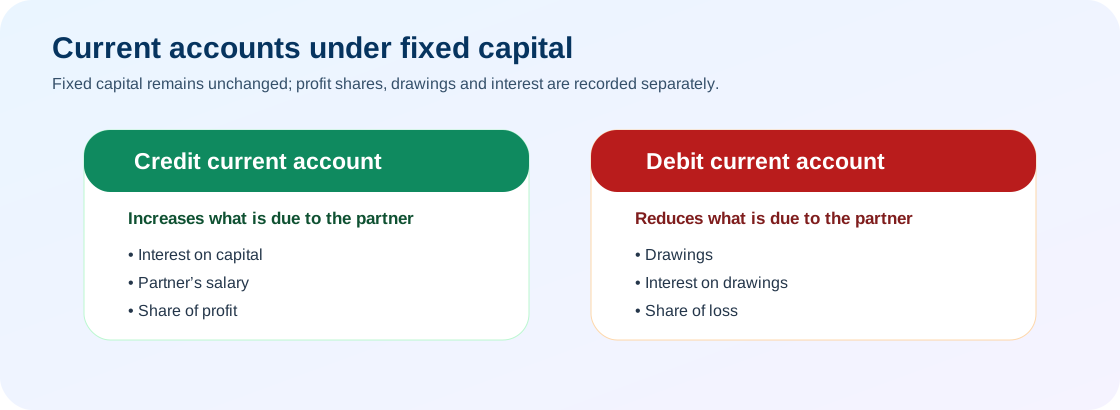
12. Fixed Capital Accounts
With fixed capital accounts, each partner’s capital account normally remains unchanged.
Ali contributes = $40,000
Sara contributes = $30,000
Their fixed capital accounts remain: Ali = $40,000, Sara = $30,000.
13. Current Accounts
When fixed capital accounts are used, each partner also has a current account.
Items Credited to Current Account
- Interest on capital
- Partner’s salary
- Share of profit
Items Debited to Current Account
- Drawings
- Interest on drawings
- Share of loss
Ali has interest on capital = $1,000, salary = $3,000, share of profit = $6,000, drawings = $4,000, interest on drawings = $200.
Closing current account = $1,000 + $3,000 + $6,000 − $4,000 − $200 = $5,800 credit.
14. Debit and Credit Current Account Balances
Credit Balance
Usually means the partnership owes the partner money. The partner has earned more than they have withdrawn.
Debit Balance
Usually means the partner has withdrawn more than they have earned and therefore owes money to the partnership.
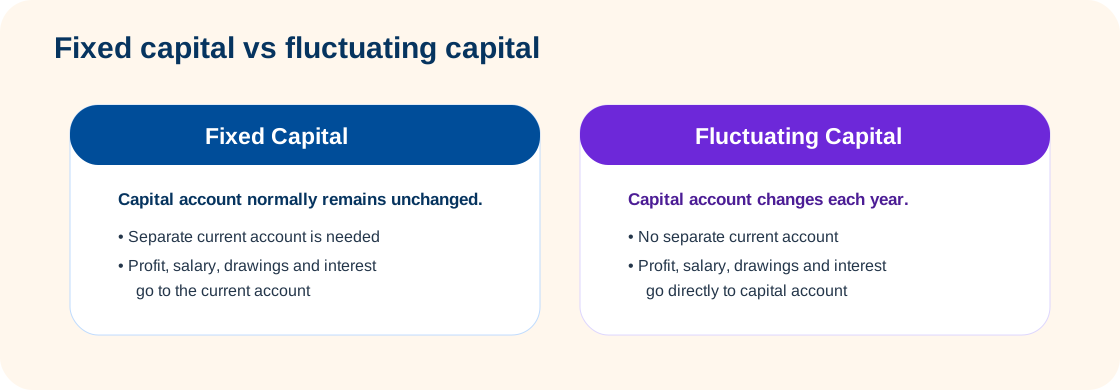
15. Fluctuating Capital Accounts
With a fluctuating capital account, there is normally no separate current account. Everything is entered directly into the capital account.
Credits
- Capital introduced
- Interest on capital
- Salary
- Share of profit
Debits
- Drawings
- Interest on drawings
- Share of loss
16. Fixed vs Fluctuating Capital
| Fixed Capital | Fluctuating Capital |
|---|---|
| Capital normally remains unchanged. | Capital changes each year. |
| Separate current account needed. | No separate current account. |
| Profit, salary, drawings and interest go to current account. | Profit, salary, drawings and interest go directly to capital account. |
Topic 5: Statement of Financial Position and Exam Guide
A partnership statement of financial position is similar to a sole trader’s, but the capital section shows more than one owner.
17. Statement of Financial Position
A partnership’s statement of financial position is similar to that of a sole trader. The main difference is the capital section, because there is more than one owner.
| Capital Section | Ali $ | Sara $ | Total $ |
|---|---|---|---|
| Capital accounts | 40,000 | 30,000 | 70,000 |
| Current accounts | 5,000 | 3,000 | 8,000 |
| Total partners’ funds | 78,000 |
18. Year-End Adjustments
Partnerships make the same normal year-end adjustments as sole traders, including:
Depreciation
Charged before profit is distributed.
Accruals
Expenses owing are adjusted.
Prepayments
Amounts paid in advance are adjusted.
Irrecoverable debts
Bad debts are written off before appropriation.
Provision for doubtful debts
Provision changes are included before distribution.
Closing inventory
Used when calculating profit for the year.
19. Quick Appropriation Guide
| Item | Treatment |
|---|---|
| Profit for year | Start appropriation account |
| Interest on drawings | Add |
| Interest on capital | Deduct |
| Partner’s salary | Deduct |
| Residual profit | Share between partners |
| Interest on partner’s loan | Income statement expense – not appropriation |
Remember
Interest on capital + Salary + Share of profit
Drawings + Interest on drawings + Share of loss