Sole Traders
This chapter brings together the financial statements of a sole trader. It explains sole trader features, the income statement, gross profit, cost of sales, goods taken by the owner, carriage inwards and outwards, statement of financial position, capital and year-end adjustments.
Topic 1: Sole Trader Basics and Financial Statements
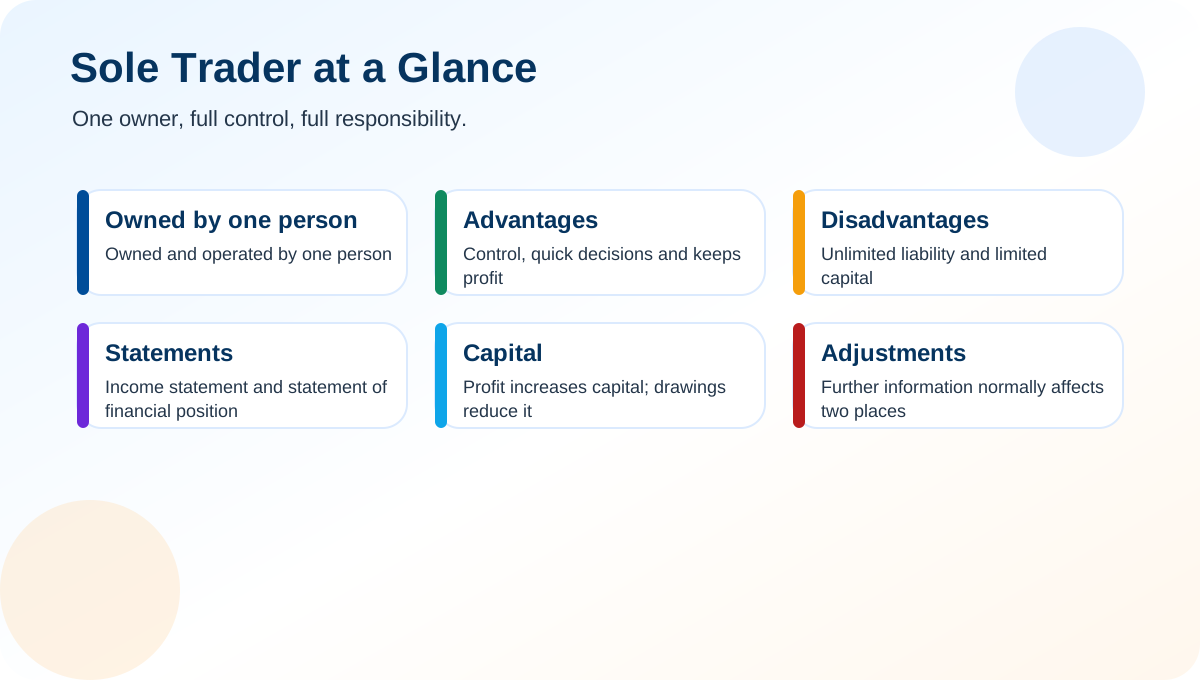
A sole trader is owned by one person, but the accounting statements still need to show performance and position clearly.
1. What is a Sole Trader?
Examples
- Small shop owner
- Hairdresser
- Electrician
- Landscaper
- Specialist repair business
- Owner has full control.
- Decisions can be made quickly.
- Easy and inexpensive to start.
- Owner keeps all the profit.
- Financial statements do not normally have to be published.
- Owner is their own boss.
- Unlimited liability – personal assets may be used to pay business debts.
- Difficult to raise large amounts of capital.
- Owner carries all responsibility.
- Owner may lack some business skills.
- Difficult to attract highly skilled employees.
2. Financial Statements of a Sole Trader
The two main financial statements are the income statement and the statement of financial position.
Income Statement
Shows the financial performance of the business and calculates:
- gross profit
- profit for the year
It is prepared for the year ended...
Statement of Financial Position
Shows the financial position of the business on a particular date, including:
- assets
- liabilities
- capital
It is prepared as at...
3. Income Statement
For a trading business, the income statement has two main parts:
- Trading section → calculates gross profit.
- Profit and loss section → calculates profit for the year.
Topic 2: Trading Section — Gross Profit and Cost of Sales
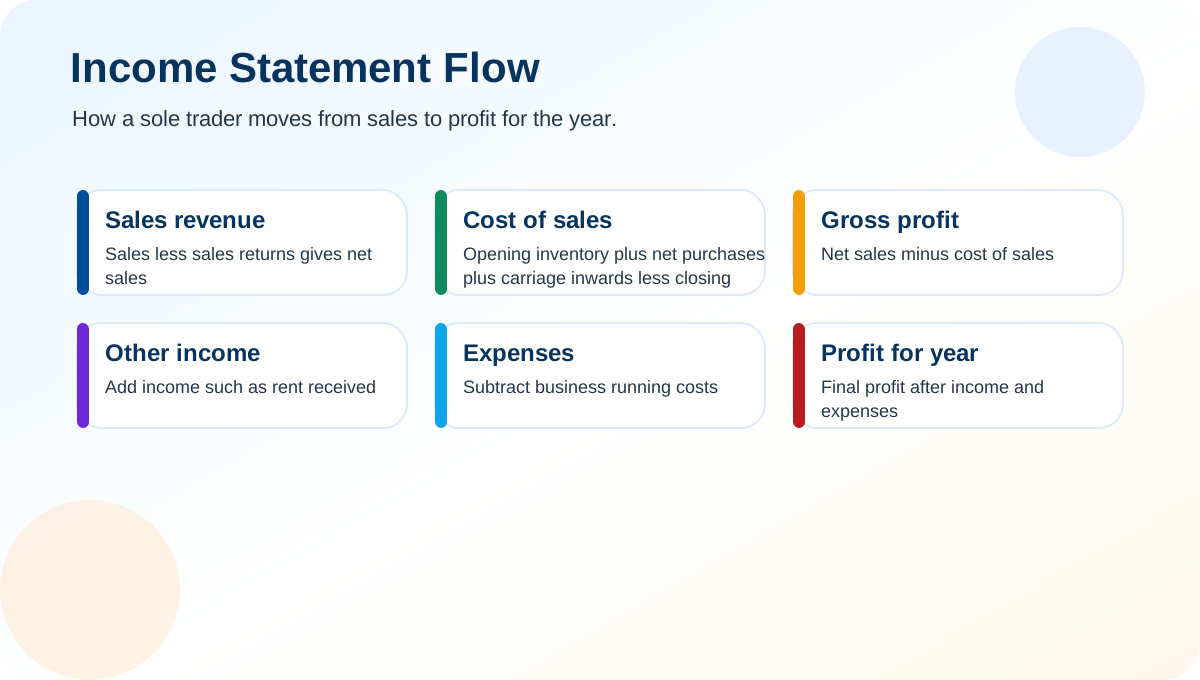
The trading section shows how net sales and cost of sales lead to gross profit.
4. Gross Profit
Sales = $50,000
Sales returns = $2,000
Net sales = $50,000 − $2,000 = $48,000
Cost of sales = $30,000
Gross profit = $48,000 − $30,000 = $18,000
5. Cost of Sales
Opening inventory = $5,000
Purchases = $25,000
Purchases returns = $2,000
Carriage inwards = $1,000
Closing inventory = $6,000
Net purchases = $25,000 − $2,000 = $23,000
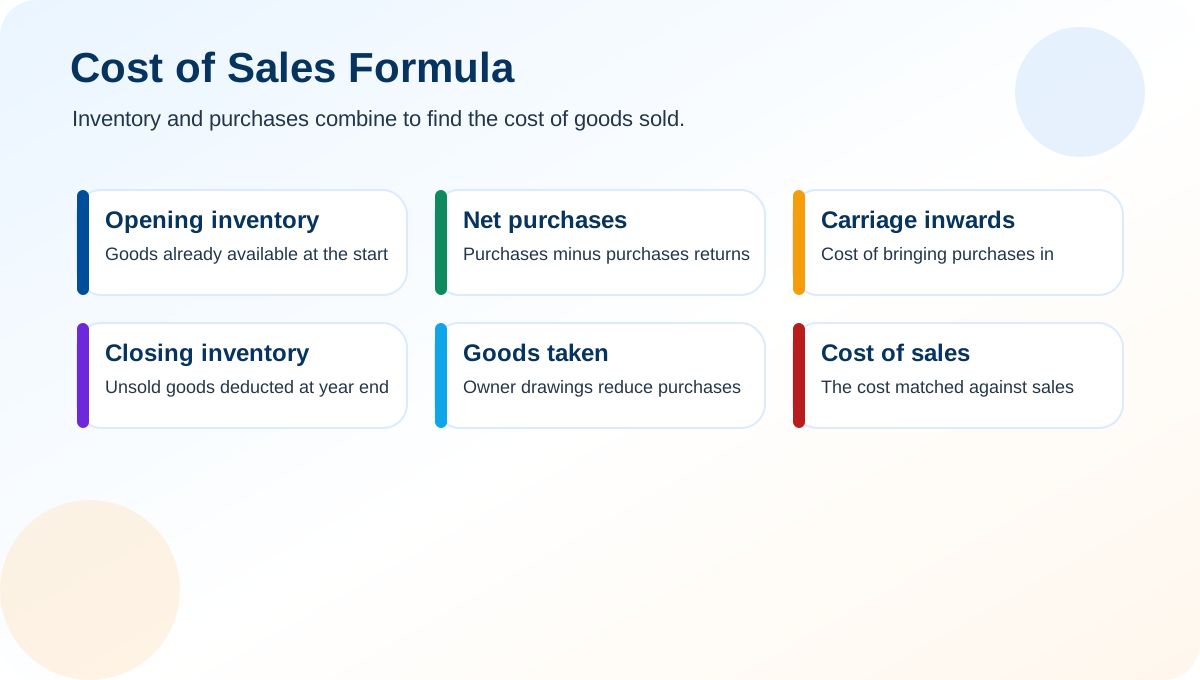
Cost of sales = $5,000 + $23,000 + $1,000 − $6,000 = $23,000
6. Goods Taken by the Owner
If the owner takes goods from the business for personal use, this is drawings.
Purchases = $20,000
Goods taken by owner = $500
Adjusted purchases = $20,000 − $500 = $19,500
7. Carriage Inwards and Carriage Outwards
Carriage Inwards
Cost of bringing purchased goods to the business.
It is included in cost of sales.
Carriage Outwards
Cost of delivering goods to customers.
It is treated as an expense in the income statement.
Carriage OUT → Expense
Topic 3: Profit for the Year and Business Type
After gross profit, a sole trader adds other income and subtracts expenses to find final profit.
8. Profit for the Year
After gross profit is calculated:
- add other income
- subtract expenses
Gross profit = $20,000
Rent received = $2,000
Expenses: Rent = $4,000, Wages = $5,000, Electricity = $1,000
Total expenses = $10,000
Profit for the year = $20,000 + $2,000 − $10,000 = $12,000
9. Simple Income Statement Format
ABC Traders — Income Statement for the year ended 31 December
10. Trading Business vs Service Business
Trading Business
A trading business buys and sells goods.
- Clothing shop
- Supermarket
- Furniture retailer
Service Business
A service business provides services instead of selling goods.
- Dentist
- Solicitor
- Accountant
Dentist's fees = $40,000
Expenses = $15,000
Profit = $40,000 − $15,000 = $25,000
Topic 4: Statement of Financial Position and Capital
The statement of financial position shows what the sole trader owns, owes and has invested at one date.
11. Statement of Financial Position
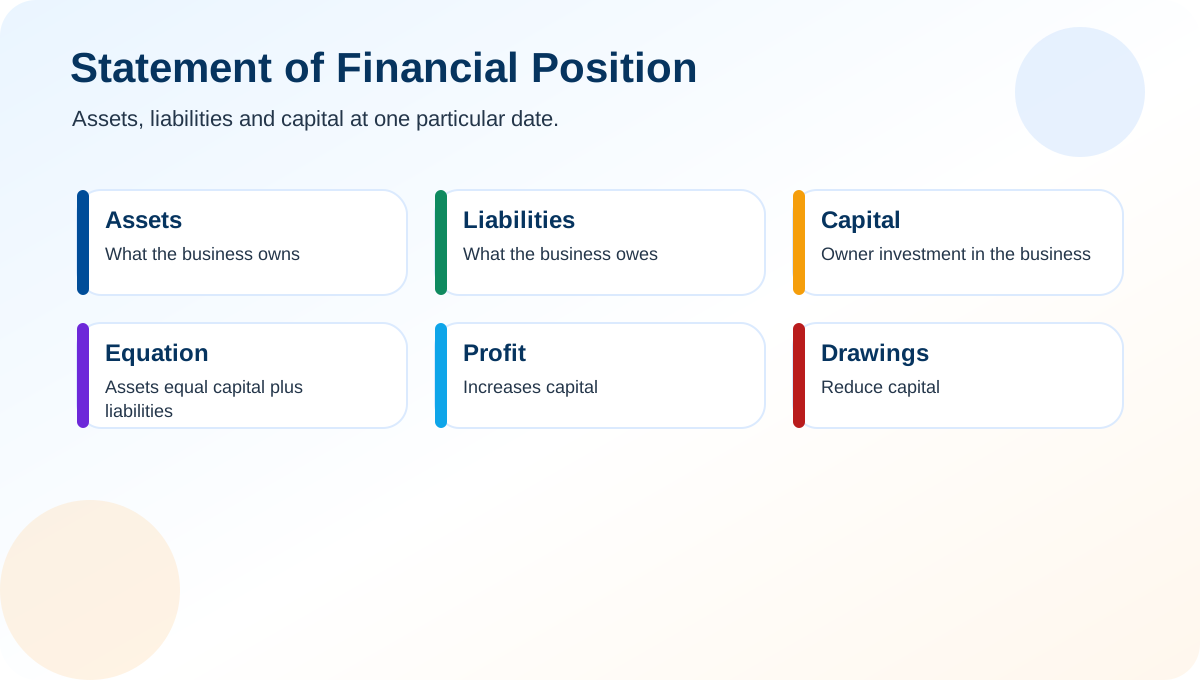
The statement of financial position shows:
Assets
What the business owns.
Liabilities
What the business owes.
Capital
The owner's investment in the business.
12. Assets
Non-Current Assets
Assets kept and used for more than one year.
- Property
- Machinery
- Motor vehicles
- Equipment
Intangible Assets
Assets without a physical form.
- Goodwill
- Patents
Current Assets
Assets expected to be converted into cash or used relatively soon.
- Inventory
- Trade receivables
- Cash at bank
- Cash in hand
13. Liabilities
Current Liabilities
Amounts normally payable within one year.
- Trade payables
- Bank overdraft
- Accrued expenses
Non-Current Liabilities
Amounts payable after more than one year.
- Long-term bank loan
14. Capital
Profit increases capital. Drawings reduce capital.
Opening capital = $50,000
Profit = $15,000
Drawings = $7,000
Closing capital = $50,000 + $15,000 − $7,000 = $58,000
15. Simple Statement of Financial Position
ABC Traders — Statement of Financial Position as at 31 December
Topic 5: Year-End Adjustments and Exam Rules
Chapter 15 brings together adjustments studied earlier, so further information must be applied carefully.
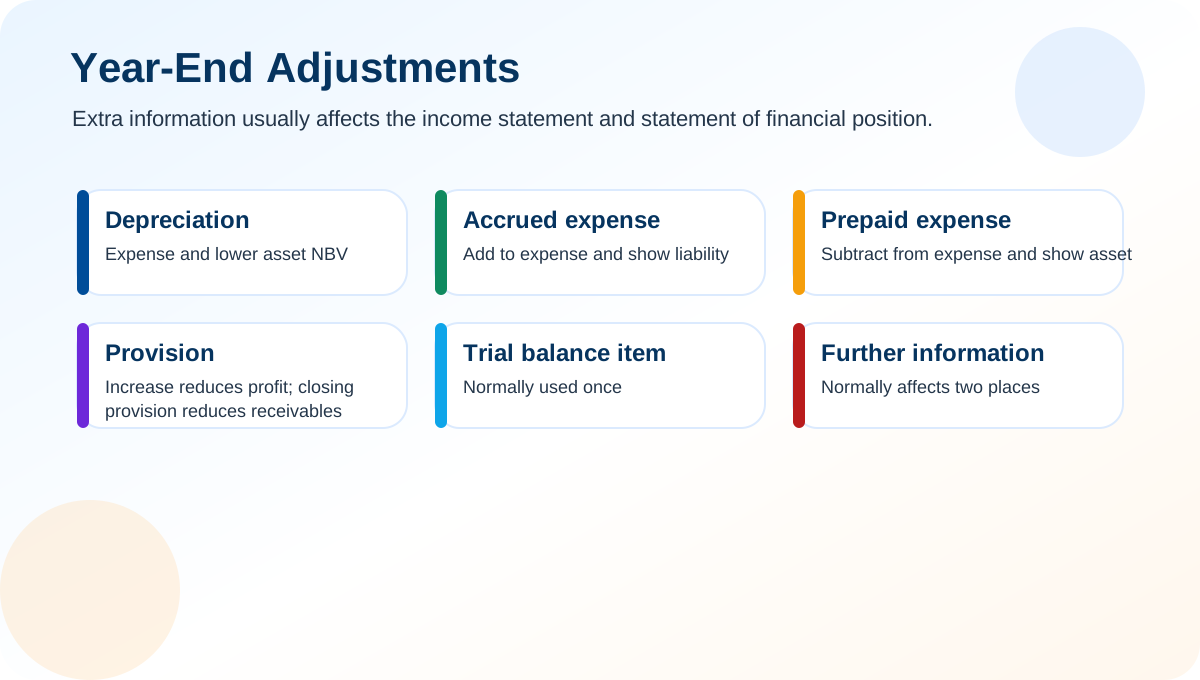
16. Year-End Adjustments
Chapter 15 brings together adjustments studied in earlier chapters.
17. Important Rule for Adjustments
Insurance prepaid = $300. This affects:
- Income statement → insurance expense decreases by $300.
- Statement of financial position → current assets increase by $300.
18. Quick Formula Guide
| Calculation | Formula |
|---|---|
| Net sales | Sales − Sales returns |
| Net purchases | Purchases − Purchases returns |
| Cost of sales | Opening inventory + Net purchases + Carriage inwards − Closing inventory |
| Gross profit | Net sales − Cost of sales |
| Profit for year | Gross profit + Other income − Expenses |
| Closing capital | Opening capital + Profit + Additional capital − Drawings |
| Accounting equation | Assets = Capital + Liabilities |
Remember
Trading Business
Sales → Cost of Sales → Gross Profit → Expenses → Profit
Service Business
Fees/Income − Expenses = Profit
Goods for owner's own use
Dr Drawings
Cr Purchases
Capital
Profit increases capital.
Drawings decrease capital.
Financial Statements
Income statement = for a period.
Statement of financial position = at a particular date.