Clubs and Societies
This chapter explains how non-profit organisations prepare accounting records, including receipts and payments accounts, income and expenditure accounts, surplus and deficit, accumulated fund, subscriptions, subscriptions in arrears, subscriptions in advance, trading activities and year-end adjustments.
Topic 1: Club and Society Basics
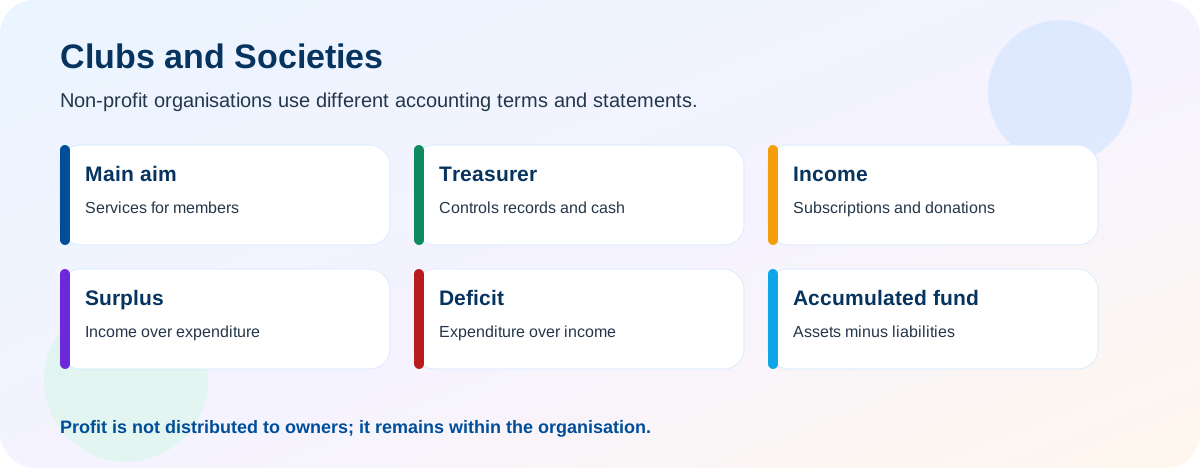
Clubs and societies are normally non-profit organisations, so they use some accounting terms differently from ordinary businesses.
1. What are Clubs and Societies?
Examples include:
Sports clubs
Provide sporting facilities for members.
Drama clubs
Provide performance and social activities.
Social clubs
Provide social facilities and events.
Charities
Use funds for organisational aims.
Recreation clubs
Provide leisure facilities.
2. Treasurer
The person responsible for maintaining the accounting records of a club or society is normally the treasurer.
- Records money received.
- Records payments.
- Maintains accounting records.
- Helps ensure funds are properly controlled.
3. Sources of Income
Common sources of money for clubs and societies include:
Members’ subscriptions
Regular membership fees.
Donations
Money given to support the club.
Entrance fees
Amounts charged to join or enter activities.
Fundraising activities
Events organised to raise funds.
Competition income
Receipts from competitions.
Café/shop sales
Income from club trading activities.
Rent received
Income from letting facilities.
4. Special Accounting Terms
A club uses slightly different terminology from a profit-making business.
| Profit-making Business | Club or Society |
|---|---|
| Profit for the year | Surplus of income over expenditure |
| Loss for the year | Deficit / excess of expenditure over income |
| Capital | Accumulated fund |
| Cash book summary | Receipts and payments account |
| Income statement | Income and expenditure account |
Topic 2: Receipts and Payments vs Income and Expenditure
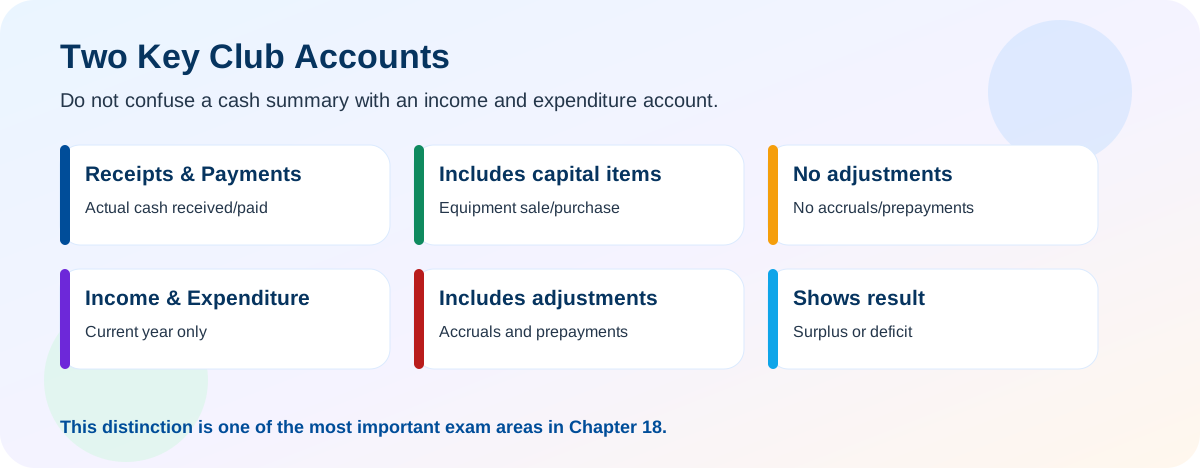
The receipts and payments account is based on cash movement. The income and expenditure account is based on the current year’s income and expenses.
5. Receipts and Payments Account
A receipts and payments account is a summary of the cash book.
Debit side
All money received, such as subscriptions received, donations, entrance fees, fundraising receipts and sale of equipment.
Credit side
All money paid, such as rent, electricity, wages, purchase of equipment and general expenses.
6. Important Features of Receipts and Payments Account
Includes
- Capital receipts.
- Revenue receipts.
- Capital payments.
- Revenue payments.
Does not include
- Depreciation.
- Accrual adjustments.
- Prepayment adjustments.
- Other non-cash items.
Opening cash = $2,000
Subscriptions received = $8,000
Donations = $5,000
Rent paid = $3,000
Equipment purchased = $4,000
Closing cash = $2,000 + $8,000 + $5,000 − $3,000 − $4,000 = $8,000
7. Income and Expenditure Account
The income and expenditure account is similar to the income statement of a business. It records only the income and expenses relating to the current financial year.
Included
- Accruals are included.
- Prepayments are adjusted.
- Depreciation is included.
Excluded
Capital receipts and capital expenditure are excluded.
8. Surplus and Deficit
Surplus
If Income > Expenditure, the organisation has a surplus of income over expenditure.
Deficit
If Expenditure > Income, the organisation has a deficit or excess of expenditure over income.
Income = $20,000; expenditure = $15,000.
Surplus = $20,000 − $15,000 = $5,000.
If expenditure were $23,000, deficit = $23,000 − $20,000 = $3,000.
9. Receipts and Payments vs Income and Expenditure
| Receipts & Payments | Income & Expenditure |
|---|---|
| Based on cash received and paid. | Based on income earned and expenses incurred. |
| Includes capital items. | Excludes capital items. |
| No depreciation. | Includes depreciation. |
| No accrual adjustments. | Includes accruals. |
| No prepayment adjustments. | Includes prepayments. |
| Similar to cash book. | Similar to income statement. |
| Shows opening/closing cash or bank. | Shows surplus or deficit. |
Topic 3: Revenue-Generating Activities and Accumulated Fund
Clubs may run activities to raise money, and any surplus affects the accumulated fund.
10. Revenue-Generating Activities
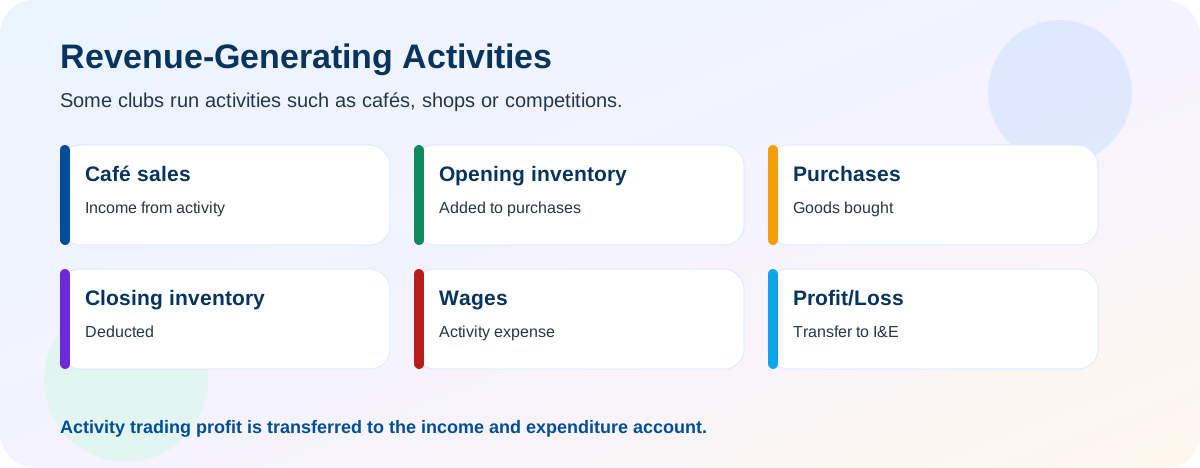
A club may operate activities specifically to raise money.
Café
May prepare a trading account.
Shop
Sells goods to raise money.
Competition
Receipts can help fund the club.
Fundraising event
Organised to raise funds.
11. Café Trading Account Example
Suppose café sales are $4,000, opening inventory is $460, purchases are $1,340, closing inventory is $500 and café wages are $2,000.
Café Trading Account Working
12. Accumulated Fund
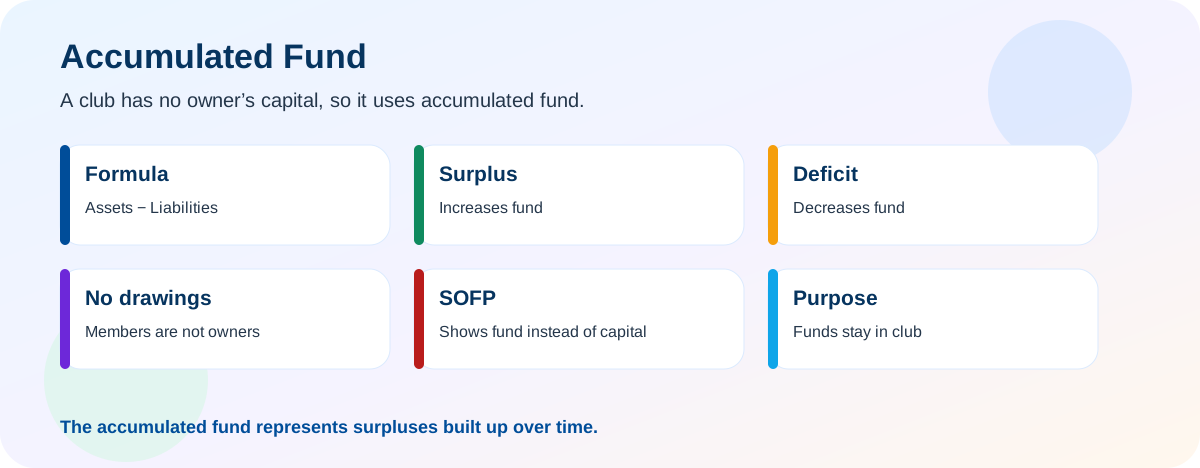
A club has no owners’ capital because it does not have owners in the same way as a sole trader. Instead, it has an accumulated fund.
The accumulated fund represents the surpluses accumulated by the organisation over time.
Assets: clubhouse $20,000, equipment $8,000, bank $2,000.
Total assets = $30,000.
Liabilities = $5,000.
Accumulated fund = $30,000 − $5,000 = $25,000.
13. Effect of Surplus and Deficit
Surplus
A surplus increases the accumulated fund.
Deficit
A deficit decreases the accumulated fund.
Opening accumulated fund = $30,000; surplus = $5,000.
Closing accumulated fund = $30,000 + $5,000 = $35,000.
If instead there were a deficit of $4,000: $30,000 − $4,000 = $26,000.
14. Statement of Financial Position
The statement of financial position of a club is similar to that of a sole trader. Instead of capital, it shows the accumulated fund.
Non-current assets
Clubhouse, equipment and furniture.
Current assets
Inventory, subscriptions owing, bank and cash.
Liabilities
Trade payables, accrued expenses and subscriptions received in advance.
Topic 4: Subscriptions
Subscriptions often need adjustments because cash received may not equal subscription income for the current year.
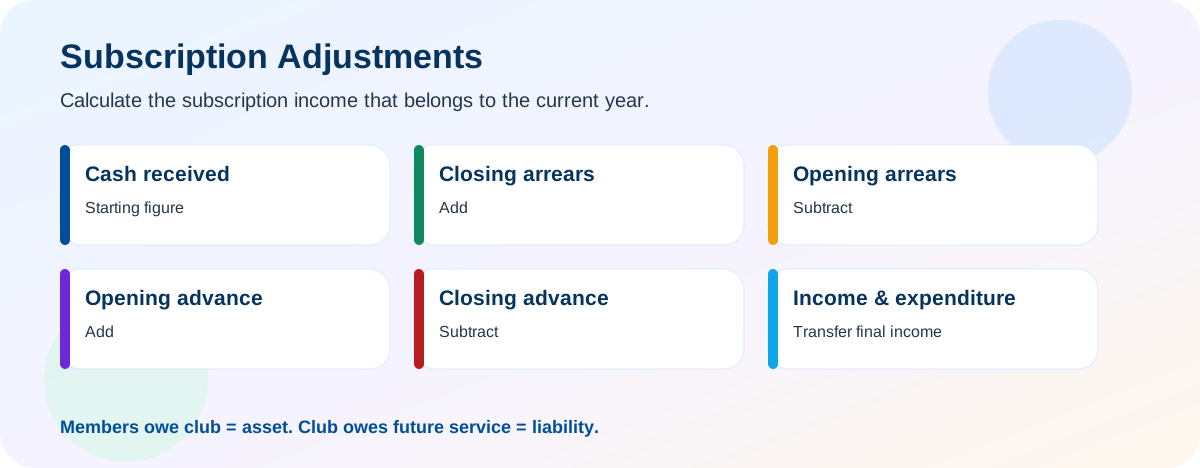
15. Subscriptions
Subscriptions often require adjustments because the cash received during the year may not equal the amount that belongs to that year.
Subscriptions in arrears
Members owe the club money for the current year.
Subscriptions in advance
Members have paid this year for a future membership period.
16. Subscriptions in Arrears
Subscriptions in arrears are amounts members should have paid for the current year but have not yet paid.
- They are included as income for the current year.
- They are shown as a current asset.
- This is because members owe money to the club.
Subscriptions received = $10,000
Subscriptions owing at year end = $500
Subscription income = $10,000 + $500 = $10,500
17. Subscriptions in Advance
Subscriptions in advance are amounts received this year that relate to the next financial year.
- They are excluded from current year’s subscription income.
- They are shown as a current liability.
- This is because the club has received payment before the membership period is due.
Subscriptions received = $10,000
Included in this is $700 for next year.
Subscription income = $10,000 − $700 = $9,300
18. Subscription Income Formula
Using the subscriptions account shown in the chapter, a useful calculation is:
Cash received = $12,000
Opening arrears = $500; closing arrears = $700
Opening advance = $300; closing advance = $400
Subscriptions for current year = $12,000 + $700 − $500 + $300 − $400 = $12,100
19. Subscriptions – Statement of Financial Position
| Subscription Adjustment | Treatment |
|---|---|
| Subscriptions in arrears | Current asset |
| Subscriptions in advance | Current liability |
Topic 5: Year-End Adjustments, No Drawings and Exam Guide
Clubs make many of the same year-end adjustments as businesses, but members cannot take drawings.
20. Year-End Adjustments
Clubs make many of the same adjustments as businesses, including:
Depreciation
Included in the income and expenditure account.
Accrued expenses
Added to the current year’s expense.
Prepaid expenses
Deducted from the current year’s expense.
Closing inventory
Used where relevant, such as club trading activities.
Subscriptions
Arrears and advance amounts must be adjusted.
21. No Drawings
Members of a club are not owners. Therefore, they cannot make drawings from the organisation.
Quick Comparison
| Sole Trader | Club/Society |
|---|---|
| Profit-making organisation | Non-profit organisation |
| Owner | Members |
| Capital | Accumulated fund |
| Profit | Surplus |
| Loss | Deficit |
| Income statement | Income and expenditure account |
| Cash book | Receipts and payments account |
| Drawings possible | No drawings |
Key Terms
Club or society
Usually a non-profit organisation providing services or facilities for members.
Treasurer
Person responsible for maintaining the club’s accounting records.
Subscription
A fee paid regularly by members to belong to the organisation.
Receipts and payments account
A summary of the cash book showing actual money received and paid.
Income and expenditure account
Statement showing current year income and expenditure.
Surplus
Income greater than expenditure.
Deficit
Expenditure greater than income.
Accumulated fund
Assets minus liabilities; the fund built up by the club.
Subscriptions in arrears
Amounts members owe for the current year.
Subscriptions in advance
Amounts received this year for a future period.
Remember
Actual cash received and paid.
Includes capital and revenue items.
Does not include depreciation, accruals or prepayments.
Current year’s income − current year’s expenditure.
Includes accruals, prepayments and depreciation.