Manufacturing Accounts
This chapter explains how manufacturing businesses calculate the cost of producing goods. It covers direct and indirect manufacturing costs, direct materials, direct labour, direct expenses, prime cost, factory overheads, work in progress, cost of production, manufacturer income statements, inventory categories, year-end adjustments and apportionment of shared costs.
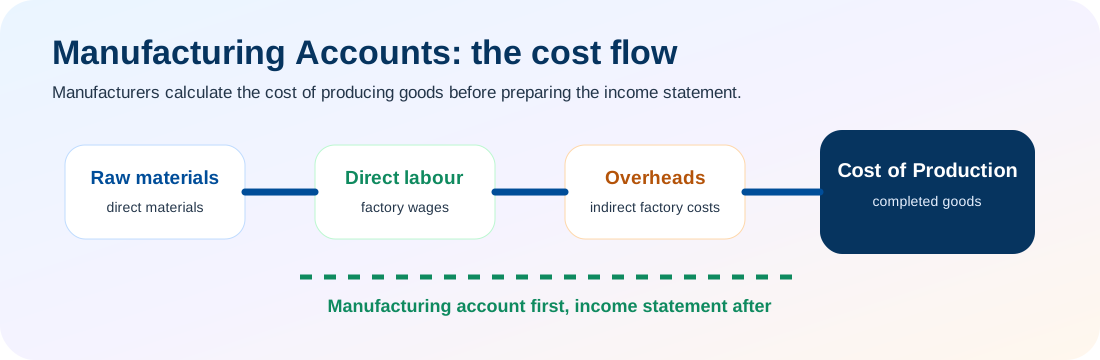
Topic 1: Manufacturing Business and Cost Types
A manufacturer makes goods, so it needs an extra account to calculate the cost of production before profit is calculated.
1. What is a Manufacturing Business?
Manufacturers:
- Buy raw materials.
- Use labour and/or machinery.
- Convert raw materials into finished goods.
A manufacturing business prepares an additional account called a manufacturing account to calculate the cost of producing its goods.
| Statement | Purpose |
|---|---|
| Manufacturing account | Calculates cost of production. |
| Income statement | Calculates profit or loss. |
| Statement of financial position | Shows assets, liabilities and capital. |
2. Direct and Indirect Costs
Direct costs
Costs that can be directly linked to the manufacture of a particular product.
- Raw materials.
- Direct factory wages.
- Carriage inwards on raw materials.
- Royalties.
- Hire of a special machine for a particular job.
Indirect costs
Costs incurred in the factory but which cannot be directly linked to one particular unit of production.
- Factory rent.
- Factory lighting.
- Factory manager’s salary.
- Factory machinery depreciation.
- Factory cleaner’s wages.
Topic 2: Direct Materials, Direct Labour, Direct Expenses and Prime Cost
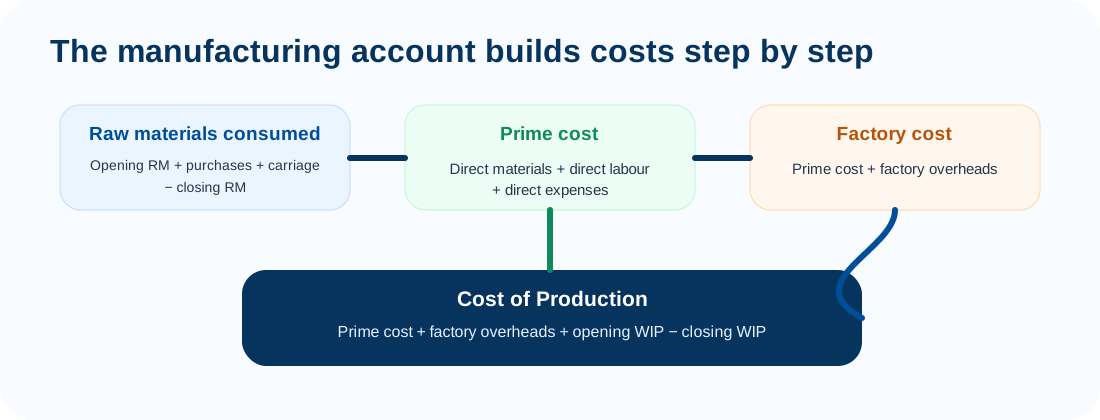
Direct costs are added together to calculate prime cost.
3. Direct Materials
Direct materials are the raw materials used to manufacture the goods.
Wood
Used by a furniture manufacturer.
Fabric
Forms part of the finished product.
Metal fittings
Also form part of the product.
4. Cost of Raw Materials Consumed
Not all raw materials purchased during the year are necessarily used.
Opening raw materials = $4,000
Purchases = $20,000
Carriage inwards = $1,000
Closing raw materials = $5,000
Cost consumed = $4,000 + $20,000 + $1,000 − $5,000 = $20,000
5. Direct Labour
Direct labour is the cost of workers directly involved in manufacturing goods.
Examples
- Assembly workers.
- Machine operators working directly on production.
- Workers paid per unit produced.
Not direct labour
Office staff, supervisors and cleaners are not direct labour.
Direct labour may be paid by time rate or by piece rate.
6. Direct Expenses
Direct expenses are expenses directly connected with manufacturing a particular product.
Royalties
A direct expense when linked directly to production.
Special machinery hire
Hire of machinery for a specific job.
7. Prime Cost
All direct manufacturing costs together make up the prime cost.
Direct materials = $20,000
Direct wages = $8,000
Direct expenses = $2,000
Prime cost = $20,000 + $8,000 + $2,000 = $30,000
Topic 3: Factory Overheads, Work in Progress and Cost of Production
Indirect factory costs and work in progress adjustments are added after prime cost.
8. Factory Overheads
Factory overheads are indirect manufacturing costs.
Factory rent
Factory building cost.
Factory electricity
Power used in the factory.
Factory insurance
Insurance for factory operations.
Depreciation
Depreciation of factory machinery.
Factory repairs
Repairs to factory machinery.
Factory staff
Factory supervisor’s salary and cleaner’s wages.
9. Indirect Materials
Indirect materials are materials used in the factory but which cannot easily be linked to individual products.
Lubricants
Used in the factory but not part of one finished item.
Loose tools
Used generally in production.
Opening lubricant inventory = $1,000
Purchases = $800
Closing inventory = $300
Cost used = $1,000 + $800 − $300 = $1,500
10. Factory Cost Before Work in Progress
This gives the factory manufacturing cost before adjusting for work in progress.
Prime cost = $30,000
Factory overheads = $12,000
Factory cost = $30,000 + $12,000 = $42,000
11. Work in Progress
Work in progress means goods which have been started but are not yet complete. They cannot yet be sold as finished goods.
Partly assembled furniture
Started but not complete.
Unfinished clothing
Still in production.
Cars on the production line
Not yet ready for sale.
12. Cost of Production
To calculate the cost of goods completed:
Prime cost = $30,000
Factory overheads = $12,000
Opening WIP = $4,000
Closing WIP = $5,000
Cost of production = $30,000 + $12,000 + $4,000 − $5,000 = $41,000
Topic 4: Manufacturing Account and Manufacturer’s Income Statement
The manufacturing account calculates cost of production; the income statement then calculates gross profit and profit for the year.
13. Manufacturing Account Format
Manufacturing Account for the year ended ...
14. Manufacturer’s Income Statement
For a manufacturer, the cost of production usually replaces normal purchases of finished goods in the trading section.
Opening finished goods = $6,000
Cost of production = $41,000
Closing finished goods = $7,000
Cost of sales = $6,000 + $41,000 − $7,000 = $40,000
If sales = $60,000, gross profit = $60,000 − $40,000 = $20,000
15. Why Might a Manufacturer Buy Finished Goods?
A manufacturer may sometimes buy finished goods because:
- Demand is unusually high.
- Production capacity is insufficient.
- An urgent customer order must be filled.
- The business does not want to lose customers.
Topic 5: Correct Placement in the Financial Statements
Manufacturing costs go into the manufacturing account, while office, selling and financial expenses go into the income statement.
16. Expenses Outside the Manufacturing Account
Not every business expense goes into the manufacturing account.
Administration expenses
- Office rent.
- Office salaries.
- Office electricity.
- Depreciation of office equipment.
Selling and distribution expenses
- Advertising.
- Sales commission.
- Sales staff salaries.
- Carriage outwards.
- Depreciation of delivery vehicles.
Financial expenses
- Bank charges.
- Loan interest.
- Discounts allowed.
17. Factory Cost or Income Statement?
| Item | Treatment |
|---|---|
| Raw materials | Manufacturing account |
| Direct factory wages | Manufacturing account |
| Factory rent | Manufacturing account |
| Factory electricity | Manufacturing account |
| Depreciation of factory machinery | Manufacturing account |
| Office salaries | Income statement |
| Office rent | Income statement |
| Advertising | Income statement |
| Sales commission | Income statement |
| Carriage outwards | Income statement |
| Discount allowed | Income statement |
18. Inventory in the Statement of Financial Position
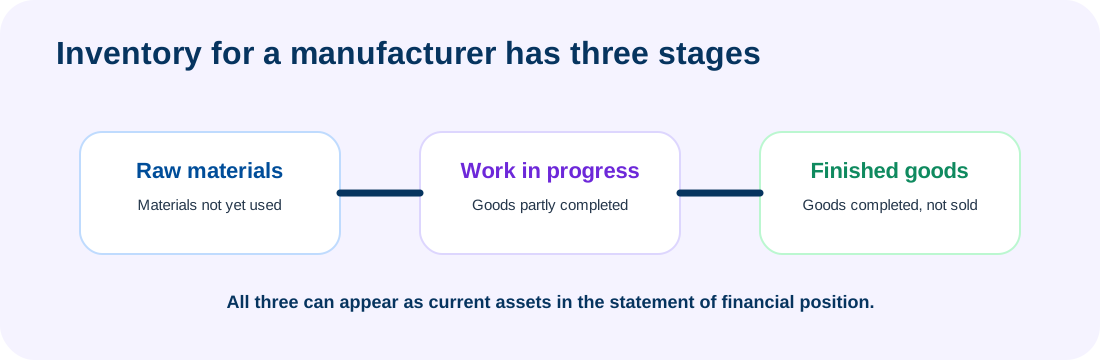
A manufacturer may have three types of inventory, and all three may appear under current assets.
Raw materials
Materials not yet used.
Work in progress
Partly completed goods.
Finished goods
Completed goods not yet sold.
Raw materials = $5,000
Work in progress = $2,000
Finished goods = $8,000
Total inventory = $5,000 + $2,000 + $8,000 = $15,000
19. Year-End Adjustments
Manufacturers make the same normal year-end adjustments as other businesses, including:
Depreciation
Place it in the correct section.
Accrued expenses
Add amounts owing.
Prepaid expenses
Deduct amounts paid in advance.
Provision for doubtful debts
Adjust trade receivables and profit.
Factory wages accrued = $500
Direct factory wages = $10,000 + $500 = $10,500
The $10,500 is included in the manufacturing account. The accrued factory wages of $500 also appear as an other payable in the statement of financial position.
Topic 6: Apportionment and Final Formula Guide
Some costs must be split between the factory and the office before the manufacturing account and income statement are completed.
20. Apportionment of Costs
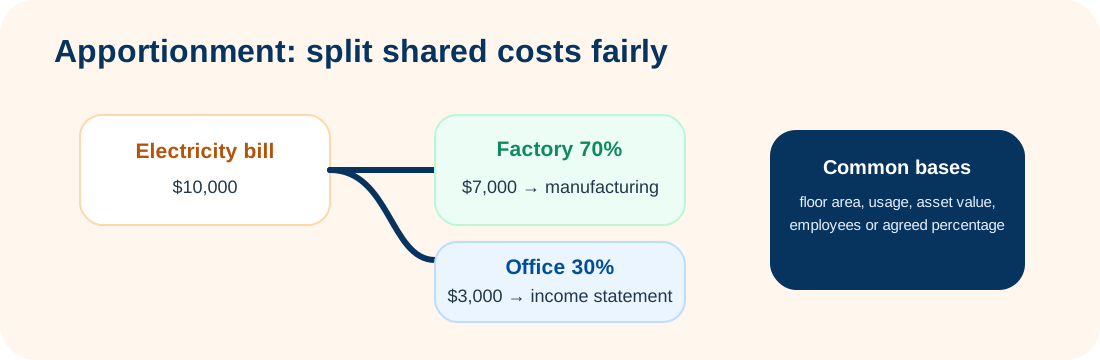
Sometimes one expense relates partly to the factory and partly to the office. The expense must be divided fairly. This is called apportionment of costs.
Electricity bill = $10,000
Factory uses 70%; office uses 30%
Factory = 70% × $10,000 = $7,000 → manufacturing account
Office = 30% × $10,000 = $3,000 → income statement as administration expense
21. Possible Bases for Apportionment
| Cost | Possible Basis |
|---|---|
| Rent | Floor area |
| Electricity | Usage or floor area |
| Insurance | Value of assets/equipment |
| Salaries | Employees or actual staff costs |
| Internet | Agreed percentage |
| Heating | Floor area |
22. Quick Formula Guide
| Calculation | Formula |
|---|---|
| Raw materials consumed | Opening raw materials + Purchases + Carriage inwards − Closing raw materials |
| Prime cost | Direct materials + Direct labour + Direct expenses |
| Factory cost before WIP | Prime cost + Factory overheads |
| Cost of production | Prime cost + Factory overheads + Opening WIP − Closing WIP |
| Cost of sales | Opening finished goods + Cost of production + Purchases of finished goods − Closing finished goods |
| Gross profit | Sales − Cost of sales |
Remember
Direct materials + direct labour + direct expenses.
All direct costs.
Indirect factory costs.
Opening WIP → Add
Closing WIP → Subtract