Accounting Policies
Accounting policies are the particular methods a business chooses to follow when applying accounting principles. This chapter explains the difference between principles and policies, then focuses on the four objectives of useful accounting information: comparability, relevance, reliability and understandability.
Topic 1: Accounting Policies and Why They Matter
Policies are the methods chosen by a business when applying accounting principles to its financial statements.
1. What are Accounting Policies?
Policies may be needed for depreciation, inventory valuation and the preparation and presentation of financial statements.
The purpose is to help the business prepare financial statements that give a true and fair view of its financial performance and position.
2. Accounting Principles vs Accounting Policies
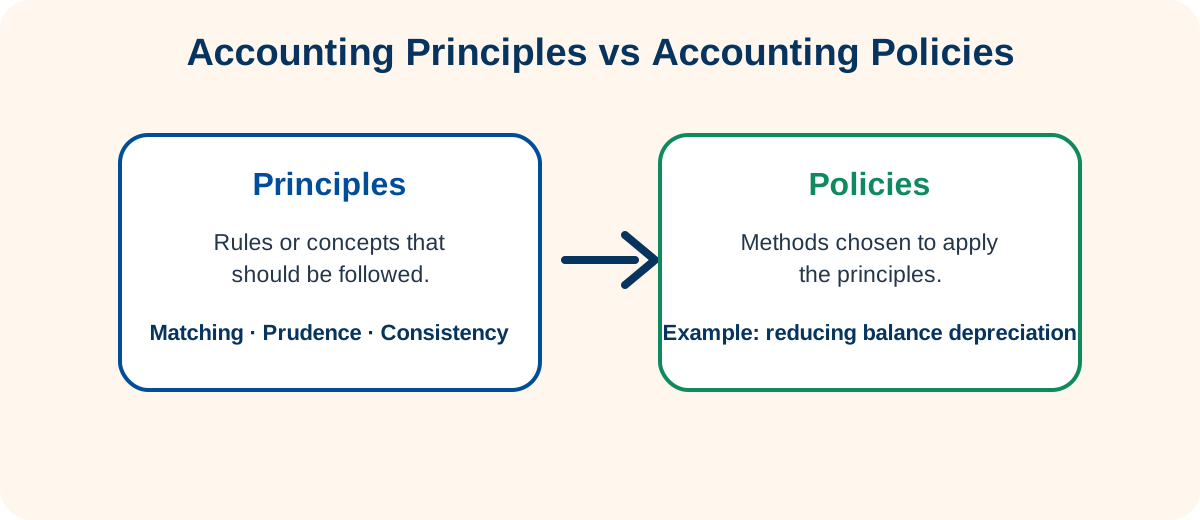
| Accounting principles | Accounting policies |
|---|---|
| Rules or concepts that should be followed. | Methods chosen by a business to apply those principles. |
| Examples include matching, prudence, consistency and historic cost. | Example: the business decides to depreciate motor vehicles using the reducing balance method. |
3. Why are Accounting Policies Important?
Users need to know which policies a business has used so that they can properly understand its financial statements.
Different policies may affect figures such as profit, depreciation, inventory and asset values. Therefore, knowledge of the accounting policies helps interested parties interpret the statements correctly.
4. Objectives When Selecting Accounting Policies
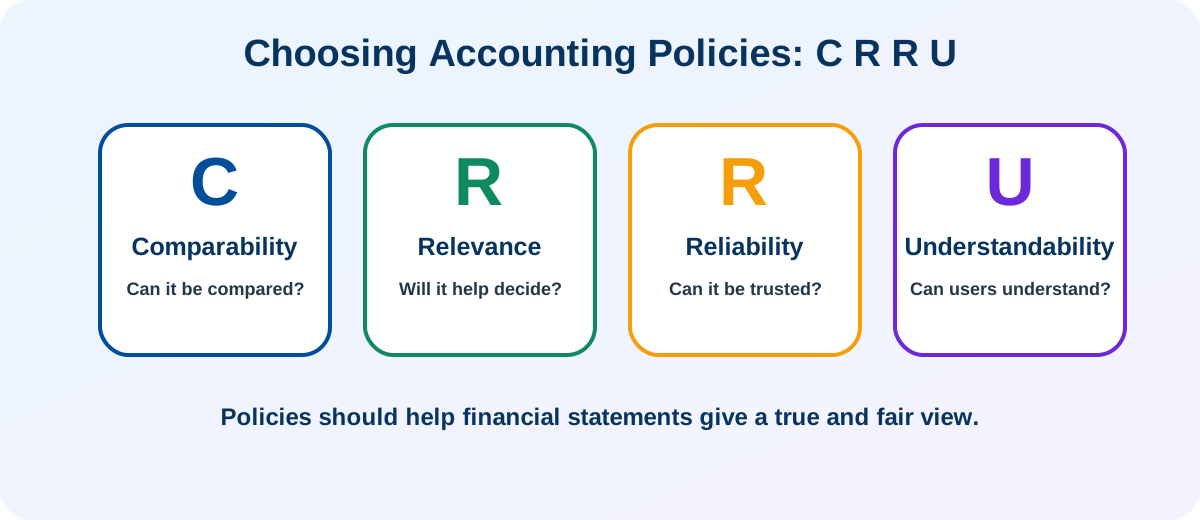
The textbook identifies four main objectives. These help determine whether accounting information is useful to interested parties.
Comparability
Can the information be compared?
Relevance
Is the information useful and timely?
Reliability
Can users depend on the information?
Understandability
Can users understand the information?
Topic 2: Comparability and Relevance
Financial information should allow meaningful comparison and should be useful enough to influence decisions.
5. Comparability
Comparability means that financial information should be capable of being compared from one year to another, with similar businesses and across different regions where appropriate.
Accounting standards, principles and policies should therefore be applied consistently.
6. Questions to Ask About Comparability
- Can this year's financial statements be compared with previous years?
- Can the statements be compared with those of similar businesses?
7. Relevance
Financial information is relevant if it is useful for making decisions. It should help users assess business performance, financial position, management efficiency and future expectations.
8. Example of Relevance
An investor is considering whether to invest today. Recent financial statements are normally more relevant than financial statements from five years ago because they provide more useful information about the company's present position.
9. Questions to Ask About Relevance
- Does the information help assess how managers have performed?
- Does it confirm previous expectations?
- Does it help revise previous expectations?
- Does it help form expectations about the future?
- Has it been provided in time to influence decisions?
Topic 3: Reliability and the Relevance-Reliability Trade-Off
Information should faithfully represent transactions, be verifiable, unbiased and free from material errors.
10. Reliability
Accounting information is reliable when users can depend on it. According to the textbook, reliable information should:
- Faithfully represent actual transactions and events.
- Be capable of independent verification.
- Be free from bias.
- Be free from material errors.
- Use suitable caution when estimates are necessary.
11. Example of Reliability
Financial statements show = $100,000.
Difference = $59,000.
The accounts do not faithfully represent what actually happened, so the information is not reliable.
12. How Can Reliability Be Checked?
- Does the information represent the actual transactions?
- Can an independent auditor verify it?
- Is it neutral and free from bias?
- Is it free from significant errors?
- Has prudence been used when estimates are uncertain?
13. Relevance vs Reliability
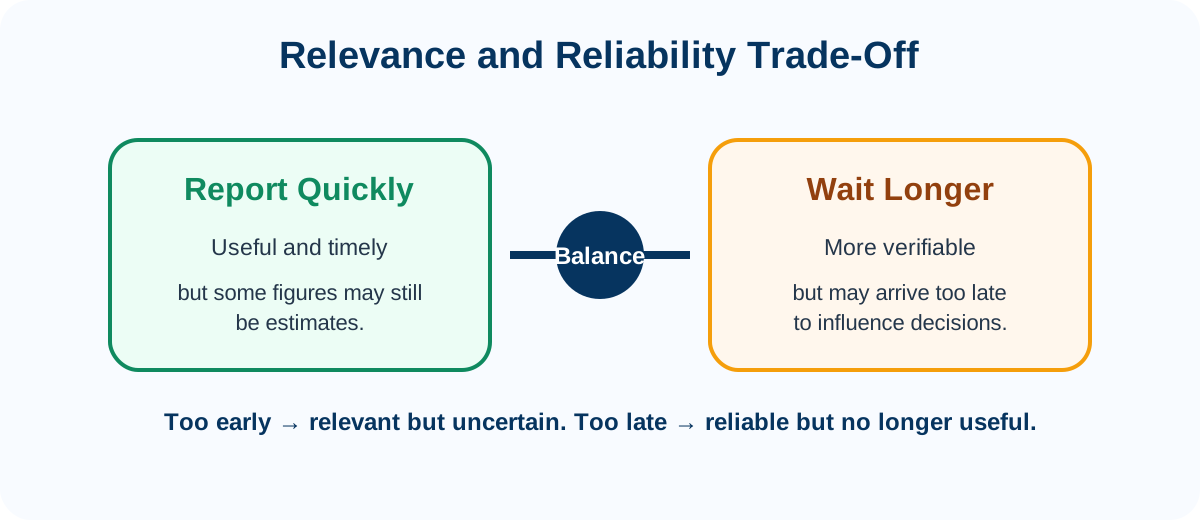
Sometimes there is a trade-off between relevance and reliability.
If information is reported immediately
It is timely and therefore more relevant, but some figures may still be estimates and therefore less reliable.
If reporting waits until every figure can be verified
Reliability may improve, but the information may arrive too late to be relevant.
Topic 4: Understandability and International Standards
Financial statements must be clear enough for users with reasonable knowledge to understand, and international standards support comparison across regions.
14. Understandability
Financial statements must be presented so that users can understand them. The textbook assumes that users have reasonable knowledge of business, reasonable knowledge of economics and accounting, and willingness to study the information carefully.
15. Making Statements Understandable
Financial information should be clear, concise, complete and properly presented. Users should also have enough knowledge and be willing to study the statements carefully.
16. The Four Objectives at a Glance
| Objective | Main question |
|---|---|
| Comparability | Can it be compared? |
| Relevance | Is it useful and timely? |
| Reliability | Can it be trusted and verified? |
| Understandability | Can users understand it? |
17. Simple Examples
Comparability
A business uses accounting policies consistently so this year's results can be compared with last year's.
Relevance
Current financial information reaches an investor before an investment decision is made.
Reliability
The figures are supported by documents and can be independently verified.
Understandability
Financial statements are presented clearly with appropriate headings and explanations.
18. International Standards and Accounting Policies
The chapter expects students to recognise the influence of international accounting standards when selecting and applying accounting policies.
For useful comparisons, accounting standards, principles and policies need to be applied consistently not only between accounting periods but also across regions. This links with Chapter 25, where common accounting frameworks were shown to make international financial information easier to compare.
Topic 5: Quick Exam Guide and Memory Aid
Remember the meaning of each objective and the key distinction between principles and policies.
Quick Exam Guide
| If asked... | Answer |
|---|---|
| What is an accounting policy? | A method chosen by a business to apply accounting principles when preparing its financial statements. |
| What is comparability? | Financial information should allow meaningful comparison between years and similar businesses. |
| What is relevance? | Information should be useful and timely enough to influence decisions. |
| What is reliability? | Information should faithfully represent transactions, be verifiable, unbiased and materially accurate. |
| What is understandability? | Financial information should be presented clearly so that users with reasonable business and accounting knowledge can understand it. |
Remember: C R R U
C – Comparability
Can I compare it?
R – Relevance
Will it help me decide?
R – Reliability
Can I trust it?
U – Understandability
Can I understand it?