
Chapter 14 · Measuring Success in Business
How do different businesses, owners, customers and employees decide whether a business is successful?
Learning objectives
- Explain the textbook’s seven measures of business success.
- Use charts, percentages and business examples to interpret performance.
- Assess why targets and stakeholder objectives matter when judging success.
Measures of Success
Business success is not measured by a single figure. Owners may have different objectives, so they need measures that show whether those objectives are being achieved. For some firms, rising sales or profits matters most; for others, customer loyalty, survival, employee welfare or long-term growth is more important.
The textbook introduces several ways to judge success. Each is useful, but the interpretation depends on targets, the size of the firm, performance of competitors and changes in the market.
Revenue
Revenue is the money a business receives from sales of goods and services. Rising revenue can suggest that more customers are buying, that prices have increased, or both. It is a useful starting point, not a complete measure: it tells us nothing directly about costs or profit.
DiGi’s revenue increased from MYR 5,954 million in 2011 to MYR 6,914 million in 2015, a rise of 16.1%. Whether that was successful depends on its targets and how other telecom companies performed.
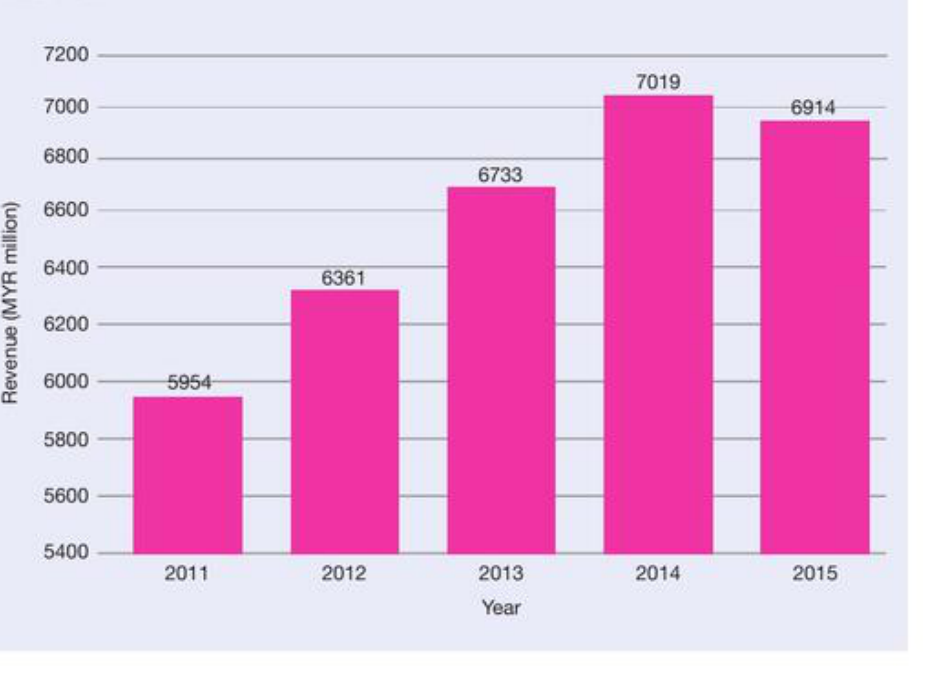
Evaluation: If DiGi aimed to grow sales by 15%, it exceeded that target. If rivals grew much faster, the same result could be less impressive. Its 2015 revenue also fell from the 2014 peak.
Market Share
Market share measures the proportion of total sales in a particular market made by one business. A rising share suggests it is winning business relative to its rivals. A high share may strengthen its market position, but the total market may be expanding or shrinking.
Zcan’s market share fell from 34% in 2010 to 27% in 2015, while Singh Holdings rose from 22% to 29%. The total market grew from US$450 million to US$560 million. The figures show why comparing percentages alone can mislead.
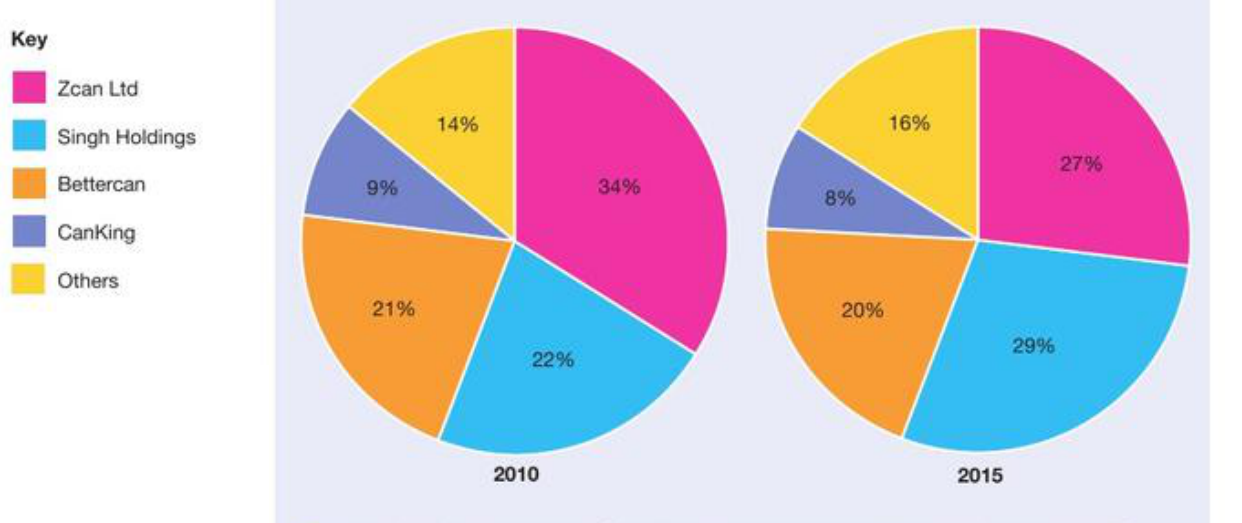
Worked example: CanKing’s revenue was 9% × $450m = $40.5m in 2010, compared with 8% × $560m = $44.8m in 2015. Market share fell, yet sales revenue increased by $4.3m.
Customer Satisfaction
Satisfied customers are more likely to return, recommend the business and make repeat purchases. Good service can build customer loyalty and a growing customer base, particularly where buyers have many alternatives.
- Complaints: record the number, nature and resolution of complaints; look for patterns rather than hiding them.
- Surveys: ask customers about service, quality and value; compare results over time.
- Online comments: monitor social-media feedback and customer reviews, recognising that responses may not represent all customers.
- Follow-up feedback: use post-purchase messages or booking surveys to identify problems and improve service.
The textbook describes Booking.com emailing customers after a booking to request feedback. Businesses can use this information to assess and improve satisfaction.
A declining number of complaints may be encouraging, but only if people can still report problems easily. The strongest evidence often combines several measures.
Check your understanding · Halfway
Try answering each question independently, then expand the suggested answer to check your understanding.
Define revenue and explain why increasing revenue can indicate success.
Show suggested answer
Revenue is income from sales. An increase may suggest growing demand or sales performance, but should be compared with the target, market conditions and competitors.
DiGi revenue rose from MYR 5,954 million in 2011 to MYR 6,914 million in 2015. Calculate the percentage increase.
Show suggested answer
(6,914 − 5,954) ÷ 5,954 × 100 = approximately 16.1%.
What is market share and why might rising market share be important?
Show suggested answer
Market share is a firm’s sales as a percentage of total market sales. An increase suggests it is winning a greater proportion of the market, potentially strengthening its competitive position.
CanKing held 9% of an aluminium-can market worth US$450 million in 2010 and 8% of a US$560 million market in 2015. Calculate its revenue in both years.
Show suggested answer
2010: 0.09 × $450m = $40.5m. 2015: 0.08 × $560m = $44.8m. Revenue rose by $4.3m despite a fall in market share.
Name two ways a business could assess customer satisfaction.
Show suggested answer
It could analyse customer complaints and comments, or collect and compare survey feedback over time.
Explain why a business with growing sales could still be unsuccessful.
Show suggested answer
Revenue may rise while costs increase faster, causing lower profit. Results may also be below the firm’s own target or worse than those of competitors.
Profit
Profit is the excess of total revenue over total costs. Rising profit can indicate success for firms seeking financial returns, but a business may earn high profits because it faces little competition or is much larger than its rivals.
- Compare profit with the firm’s objectives rather than treating any increase as sufficient.
- Consider the business’s size: a large multinational normally earns more total profit than a small trader.
- Consider competitors and industry conditions: profit levels differ between sectors.
- More advanced measures include profit margin and return on capital employed, which the textbook examines in Chapter 31.

In the DiGi case, profit after tax rose overall from MYR 1,254 million in 2011 to MYR 1,723 million in 2015, but fell from MYR 2,031 million in 2014. This offers a different view from total revenue alone.
Growth
Growth matters because many businesses aim to become larger or reach more customers. A firm can grow in several ways, and measures of size may produce different rankings.
- Turnover or revenue: annual income from sales.
- Number of employees: size of the workforce.
- Market share: the business’s proportion of market sales.
- Capital employed: the money invested in the business.
The textbook notes that growing too quickly can lead to overtrading, where a firm lacks enough resources or cash to cope with demand. Therefore, rapid growth is not always safe.
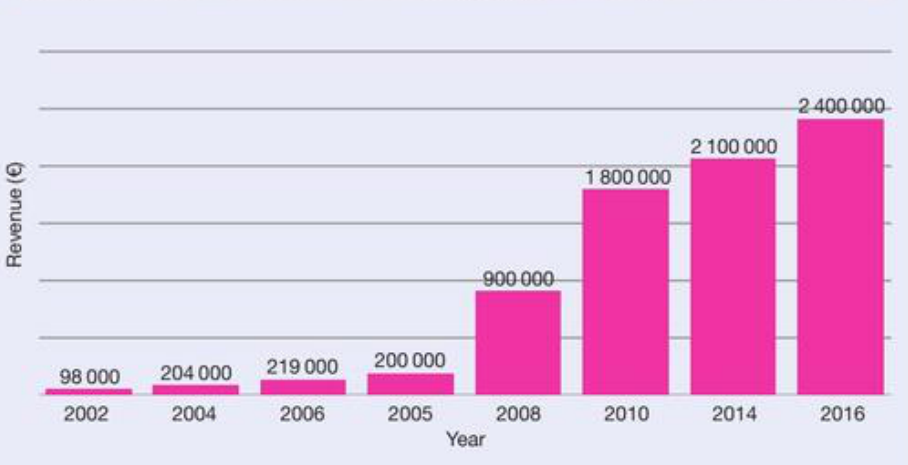
Marta Losada expanded her ready-made paella business, with an increasing proportion of sales coming through its website. The book shows revenue rising from €98,000 in 2002 to €2.4 million in 2016. This growth is evidence of progress, although profit, cash flow and customer satisfaction would also matter.
The textbook also includes an EU business-size classification based on turnover, employees and capital employed. A business’s classification depends on which measure is used, and the printed thresholds are historical textbook definitions rather than current regulatory advice.
Owner/Shareholder Satisfaction
Owners judge success partly by the rewards they expect. Shareholders in public limited companies often seek rising dividends and share prices. Institutional shareholders may place particular emphasis on consistent financial returns.
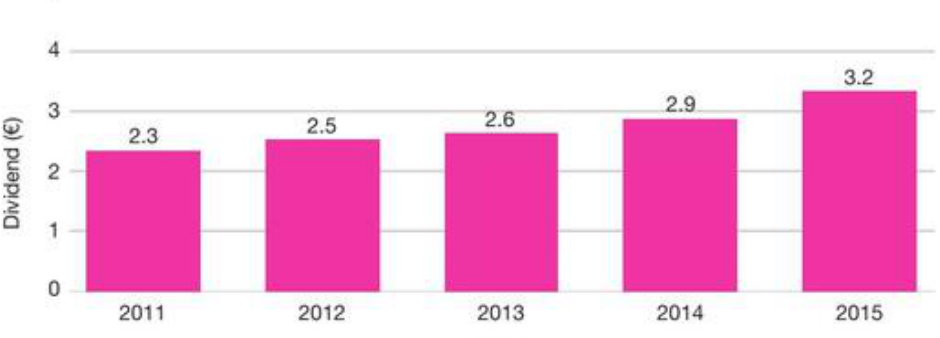
BMW’s dividend per share increased from €2.30 in 2011 to €3.20 in 2015, about 39%. The textbook also describes an increase in share price over part of the period, followed by a decline. These indicators can give mixed signals about success.
Different owners, different aims: a private company’s owner may value independence, continued survival or a reliable income more than a higher share price. A family business may have personal and non-financial priorities.
Employee Satisfaction
Employees rely on their jobs for income and security. They may regard the business as successful when it treats them well, provides fulfilling work and protects their welfare.
- Financial rewards: fair pay, bonuses and other benefits.
- Job security: confidence that employment will continue.
- Conditions and safety: a safe workplace, manageable demands and fair treatment.
- Development: training, career progression and promotion opportunities.
- Workplace relationships: cooperation and equal opportunities.
Higher profits do not automatically mean happy employees. For example, redundancies that reduce costs may please some investors but leave affected workers feeling that the business has failed them.
The Importance of Targets When Judging Success
Owners set targets to make success easier to judge. A target gives a clear benchmark: for example, increase market share by 5 percentage points during a specified year. Performance can then be compared with what was planned, not just with last year’s figures.
- Targets make progress measurable and help managers spot weaknesses.
- They can motivate employees, especially when realistic goals are linked to recognition or rewards.
- Targets should be reviewed when trading conditions change; very easy or unrealistic targets are poor guides to success.
- Different organisations may prioritise financial, operational and non-financial goals.
If a business plans to increase market share by 5 percentage points but actually gains 6.5, it has exceeded its target by 1.5 percentage points. This does not automatically prove success in every other area, such as profitability or staff welfare.
Large vs Small Businesses
The textbook contrasts large public limited companies with smaller businesses. Big listed firms face pressure from shareholders and may focus strongly on profit, growth, dividends and share prices. Small firms might consider survival, financial security, independence, personal satisfaction and customer loyalty just as important.
Large businesses
- Shareholder expectations often emphasise profit, growth and dividends.
- Sales, market share and capital employed help measure scale.
- Many stakeholder groups may disagree over success.
Small businesses
- Owners may prioritise survival and independence.
- Customer relationships and reliable personal income can matter greatly.
- Growth is not always the main objective.
Overall judgement: no single measure is universally best. A balanced assessment combines the measures relevant to the business’s objectives and stakeholders, then compares results with meaningful targets.
End-of-chapter questions
Try answering each question independently, then expand the suggested answer to check your understanding.
Identify four different measures of business success.
Show suggested answer
Any four of: revenue, market share, customer satisfaction, profit, growth, owner/shareholder satisfaction, employee satisfaction and achievement of targets.
Explain why profit is not always sufficient for judging business success.
Show suggested answer
Absolute profit should be considered alongside the firm’s size, its competitors, market conditions and objectives. A small family firm may prioritise security or personal satisfaction.
Describe two ways businesses can measure growth.
Show suggested answer
Examples include rising revenue, more employees, a larger market share and a higher amount of capital employed.
Losada Paella revenue rose from €200,000 in 2005 to €2,400,000 in 2016. Calculate its growth as a percentage of the 2005 figure.
Show suggested answer
(2,400,000 − 200,000) ÷ 200,000 × 100 = 1,100%. These are historical case-study figures.
What is overtrading, and why might it damage a growing business?
Show suggested answer
Overtrading occurs when a firm takes on more work than its resources can fund effectively. It may struggle to pay suppliers, maintain cash flow or deliver orders despite increasing sales.
BMW’s dividend per share rose from €2.30 in 2011 to €3.20 in 2015. Calculate the percentage increase.
Show suggested answer
(3.20 − 2.30) ÷ 2.30 × 100 = approximately 39.1%.
How can shareholders of a public limited company assess success differently from owners of a small family firm?
Show suggested answer
Shareholders may focus on dividends and share-price growth. Family owners may focus on survival, independence, income, job security or personal satisfaction.
Describe three aspects of employee satisfaction other than wages.
Show suggested answer
Examples include safe working conditions, training, promotion opportunities, fair treatment, job security and good relationships with colleagues.
Explain why achieving a specific target is a better test of success than simply reporting higher sales.
Show suggested answer
Targets establish what the business intended to achieve. A comparison with an explicit, realistic and relevant target makes performance easier to judge than a number in isolation.
A company increases profits after cutting staff. Evaluate whether it has been successful.
Show suggested answer
Owners may view higher profits as a success, while employees losing jobs may disagree. A balanced judgement considers objectives, long-term performance, customer service and different stakeholder interests.
Recommend three measures for a newly established local restaurant and justify your choices.
Show suggested answer
Revenue and profit can test commercial viability; repeat visits or customer feedback can show satisfaction; and a clear survival or sales target can track progress. The best combination depends on the owner’s priorities and available data.
Chapter 14 recap
Success can be measured using revenue, market share, customer satisfaction, profit, growth, owner/shareholder satisfaction and employee satisfaction. The best measure depends on objectives, the business’s circumstances and the expectations of different stakeholders. Targets help turn these measures into a meaningful judgement.
Original learning notes based on Chapter 14, Measuring Success in Business (printed pages 108–116), of the user-provided Pearson Edexcel International GCSE Business textbook. Numerical examples and historical figures are adapted from that chapter. IGCSE360 is independent of Pearson.