Irrecoverable Debts and Provision for Doubtful Debts
This chapter explains how credit customers who do not pay are treated, how doubtful debts are estimated, how provisions are adjusted, and how the effects appear in the income statement and statement of financial position.
Topic 1: Irrecoverable Debts
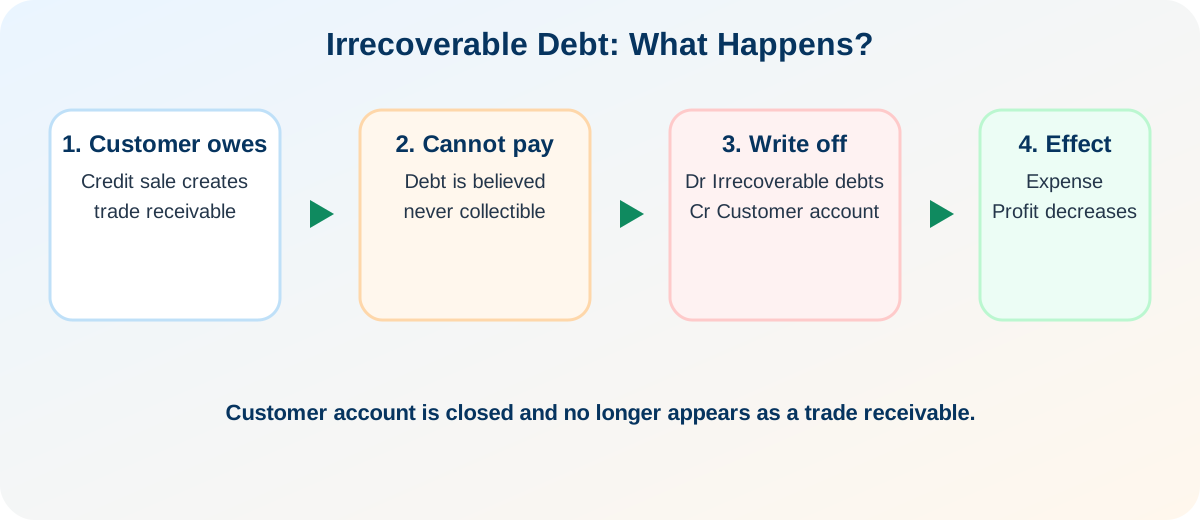
An irrecoverable debt is an actual loss from a credit customer who is not expected to pay.
1. Irrecoverable Debts
It is sometimes called a bad debt.
Ahmed owes the business $800 but becomes unable to pay. The $800 is written off as an irrecoverable debt.
2. Writing Off an Irrecoverable Debt
When a customer's debt is written off, the business removes the customer from trade receivables and records the loss as an expense.
| Debit | Credit |
|---|---|
| Dr Irrecoverable Debts | Cr Customer's Account |
Sara owes $600 and the debt is considered irrecoverable.
| Account | Debit $ | Credit $ |
|---|---|---|
| Irrecoverable Debts | 600 | |
| Sara | 600 |
At the end of the year, irrecoverable debts are transferred to the income statement as an expense.
3. Part of a Debt is Recovered
Sometimes a customer can pay only part of the amount owed. The amount received is recorded in Bank, and the unpaid part is written off as an irrecoverable debt.
Ali owes $1,000 but can pay only $700.
| Account | Debit $ | Credit $ |
|---|---|---|
| Bank | 700 | |
| Irrecoverable Debts | 300 | |
| Ali | 1,000 |
4. Irrecoverable Debts Recovered
It is treated as income, so it increases profit.
A customer's debt of $500 was written off last year. This year the customer unexpectedly pays the $500.
| Debit | Credit |
|---|---|
| Dr Cash/Bank $500 | Cr Irrecoverable Debts Recovered $500 |
5. Avoiding Irrecoverable Debts
Businesses can reduce bad debts through credit control.
Before allowing credit
- checking the customer's creditworthiness
- asking for trade references
- setting credit limits
After allowing credit
- keeping customer accounts up to date
- sending invoices and statements promptly
- offering discounts for early payment
When debts become overdue
- contacting customers when debts become overdue
- refusing further credit to customers who do not pay
Topic 2: Doubtful Debts and Provisions
A doubtful debt is not yet an actual loss, but the business estimates that some receivables may not be collected.
6. Doubtful Debts
Irrecoverable debt
Known to be uncollectable.
Doubtful debt
The business is not certain whether the customer will pay.
Because some trade receivables may become irrecoverable in the future, businesses may create a Provision for Doubtful Debts.
7. Why Create a Provision for Doubtful Debts?
A provision is made so that financial statements are more realistic and cautious.
- trade receivables are not overstated
- profit is not overstated
- financial statements give a true and fair view
Possible losses are recognised.
The possible loss is recognised in the same period as the related credit sales.
8. Calculating the Provision
The provision is often calculated as a percentage of trade receivables.
Trade receivables = $20,000
Provision = 5%
Statement of Financial Position
9. Creating a Provision for the First Time
When a provision is created for the first time, it is treated as an expense and the provision account has a credit balance.
| Debit | Credit |
|---|---|
| Dr Income Statement | Cr Provision for Doubtful Debts |
Trade receivables = $10,000
Provision = 3%
10. Irrecoverable Debts Before Calculating the Provision
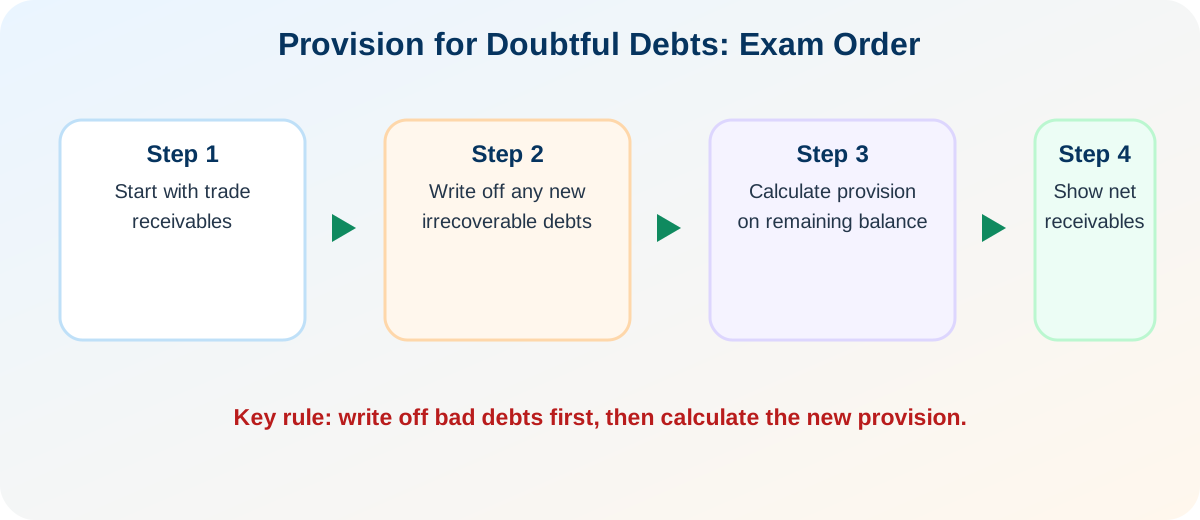
Trade receivables = $12,000
Irrecoverable debt to be written off = $2,000
Provision = 5%
Topic 3: Increasing or Decreasing the Provision
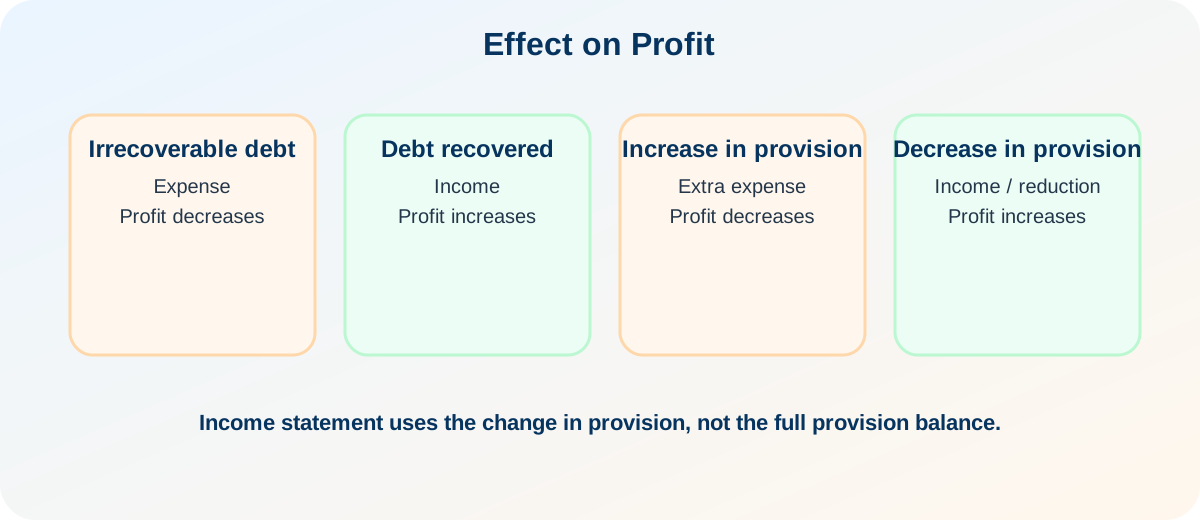
The income statement records the change in provision, while the statement of financial position shows the full new provision.
11. Increasing the Provision
If the new provision is greater than the old provision, there is an increase in provision.
Old provision = $400
New provision = $600
12. Example of Increasing a Provision
Opening provision = $250
Closing trade receivables = $3,000
Provision required = 10%
13. Decreasing the Provision
If the new provision is smaller than the old provision, there is a decrease in provision.
Old provision = $500
New provision = $350
14. Example of Decreasing a Provision
Last year's trade receivables = $3,000
Provision = 5%
This year's trade receivables = $2,000
Income statement
Add decrease in provision $50.
Statement of financial position
Deduct the new provision of $100 from trade receivables.
15. Provision for Doubtful Debts – Financial Statements
Suppose:
- Trade receivables = $15,000
- New provision = $750
- Old provision = $500
Income Statement
Expense: Increase in provision for doubtful debts = $250
Statement of Financial Position
Topic 4: Estimating, Comparing and Remembering
Learn the difference between actual bad debts and estimated doubtful debts, then apply the profit rules carefully.
16. How Can a Business Estimate the Provision?
The book identifies three methods:
- Use past experience and apply a percentage to trade receivables.
- Examine individual debts and identify doubtful ones.
- Use an ageing schedule – older debts are considered more likely to become irrecoverable.
17. Irrecoverable Debt vs Provision for Doubtful Debts
| Irrecoverable Debt | Provision for Doubtful Debts |
|---|---|
| Definitely will not be paid | May not be paid |
| Actual loss | Estimated future loss |
| Removed from trade receivables | Deducted from remaining trade receivables |
| Expense in income statement | Increase in provision is an expense |
| Customer's account is closed | Customer's account remains open |
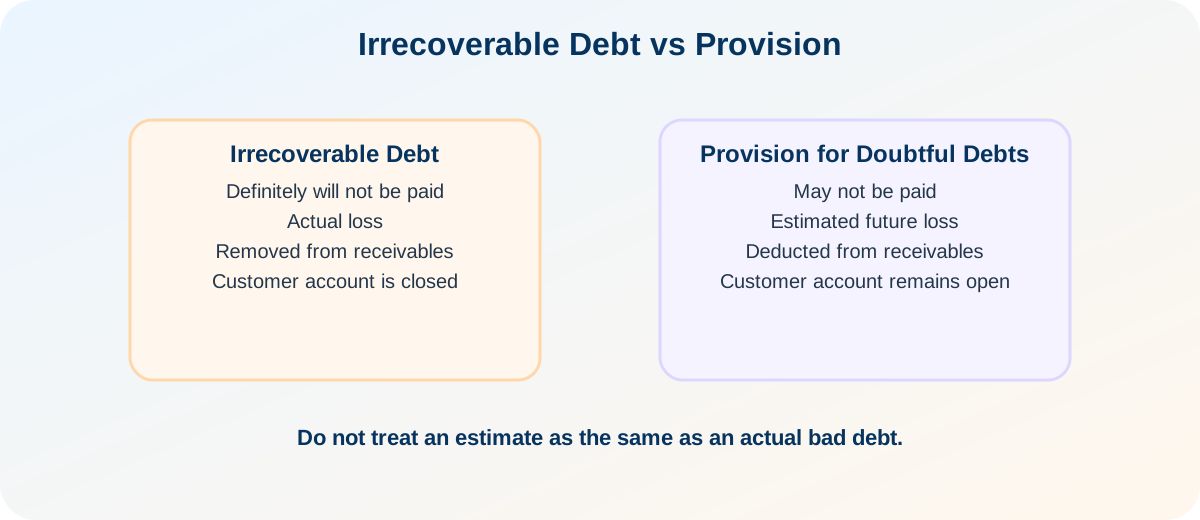
18. Effect on Profit
| Item | Effect on Profit |
|---|---|
| Irrecoverable debt | Decreases profit |
| Irrecoverable debt recovered | Increases profit |
| Increase in provision | Decreases profit |
| Decrease in provision | Increases profit |
Key Terms
Remember
Irrecoverable Debt
Dr Irrecoverable Debts
Cr Customer
Debt Recovered
Dr Cash/Bank
Cr Irrecoverable Debts Recovered
Provision
Trade Receivables × Provision %
Increase in Provision
Expense → Profit decreases
Decrease in Provision
Income → Profit increases