
Chapter 2 · Business Objectives
Understand why a business sets objectives, how financial and non-financial objectives differ, and why its targets may change over time.
Learning objectives
- Explain the purpose of business objectives and the benefits of clear targets.
- Compare survival, profit, sales growth, market share and financial security.
- Explain social objectives, personal satisfaction, challenge and independence.
- Apply SMART objective-setting and explain why objectives evolve.
The Importance of Clear Objectives
Businesses do not simply produce goods and services without a direction. They set objectives to show what they want to achieve and to guide the decisions that take them there. An objective may involve money, growth or the way the business is run.
Why are objectives important?
- Direction: owners and managers know what they are working towards and can plan the next steps.
- Motivation: employees have targets to work towards and may receive recognition or rewards for achieving them.
- Better decision-making: a business can choose actions that support its priorities rather than letting the business drift.
- Performance measurement: actual results can be compared with the target to see whether the business has succeeded.
A shop aims to increase its monthly sales by 10% over one year. The owner can plan promotions, discuss targets with employees and compare sales results each month to judge progress.
Objectives should be clear enough for everyone to understand. A target such as “be successful” gives less guidance than a target with a measurable result and a deadline.
Financial Objectives
Financial objectives focus on a business's money-related performance. They are particularly important in the private sector because owners commonly want a financial return on their investment. Different businesses may prioritise different objectives at different times.
Survival
Survival means continuing to trade. It can be the most urgent objective for a new business, one facing difficult trading conditions or one losing customers to competitors. A business concentrating on survival may postpone expansion and try to control costs.
Profit
Most private-sector businesses aim to earn a profit. Profit maximisation means seeking the highest possible profit in a given period. A company may do this to provide financial returns to its owners or shareholders, who may receive dividends.
Sales
Some businesses aim for sales growth. Selling more can increase the scale of the business, help it spread certain costs over more units, increase its public profile and potentially increase earnings for owners. However, more sales do not automatically produce more profit.
Increase market share
Market share is the proportion of sales in a market that a business achieves. A business may wish to win customers from rivals to strengthen its market position. A larger market share can improve recognition and sometimes make it easier to launch further products.
If one café gains more of the area's customers, its market share rises. It may be able to expand or attract new suppliers, although it must still manage costs and maintain service quality.
Financial security
Not every owner wants the maximum possible profit. Some aim for profit satisfying: earning enough to support their needs and provide financial security. This can allow the owner to avoid taking on the additional risks and responsibilities of rapid growth.
Profit maximisation
Try to earn as much profit as possible in a particular period.
Profit satisfying
Earn enough profit to meet the owner's needs and preferred lifestyle.
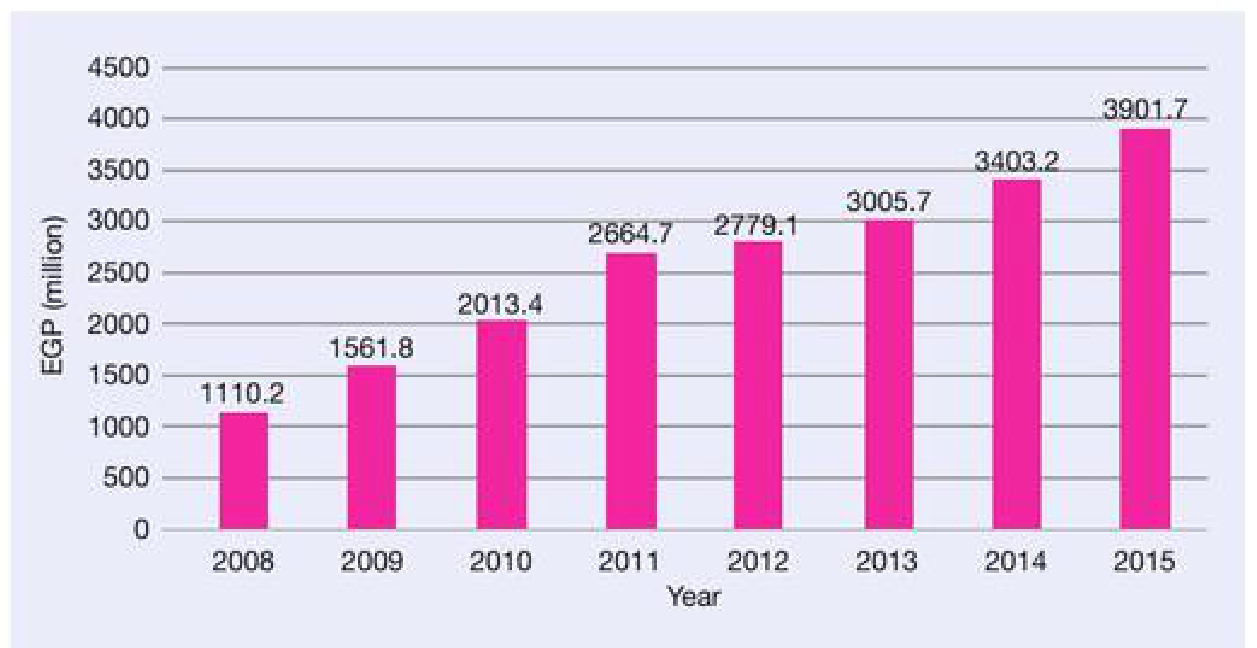
The chart shows a steady increase in reported profits across the years shown. The textbook discusses the company's generous dividend policy; rising profits might support financial returns to shareholders. Exam tip: when interpreting a chart, state the trend and support it with figures and dates.
Check your understanding · Halfway
Attempt the questions before revealing the suggested answers.
Explain two reasons why clear objectives can help a business succeed.
Show suggested answer
Objectives provide direction for decisions and allow managers to judge performance against targets. They can also motivate employees by giving them something specific to work towards.
A new café is struggling to pay its suppliers. Which financial objective should be its priority, and why?
Show suggested answer
Survival is the most urgent objective because the café must keep trading and meet its costs before it can concentrate on expansion or profit maximisation.
A clothing company increases sales revenue but its costs rise faster. Has it necessarily increased profit?
Show suggested answer
No. Revenue is money from sales, whereas profit is revenue minus costs. Profit could fall even when sales increase if costs rise by a greater amount.
Why might a business aim to increase its market share? Give one possible benefit.
Show suggested answer
It may gain a stronger position against competitors, potentially achieve higher sales or have greater influence in its market.
What is the difference between profit maximisation and profit satisfying?
Show suggested answer
Profit maximisation means seeking the highest possible profit. Profit satisfying means earning enough to meet the owners' needs rather than pursuing the greatest possible profit.
Non-Financial Objectives
Some business owners are motivated by aims that are not directly about money. The objectives they choose often depend on the type of organisation and their personal ambitions. A business may pursue both financial and non-financial objectives at the same time.
Social Objectives
Social objectives aim to improve people's well-being or the environment. Public-sector organisations may focus on the quality of services and lower costs for the people they serve. Social enterprises, charities and cooperatives may aim to provide social or environmental benefits rather than simply maximise profit.
A business collects used textbooks and distributes them to students who cannot easily afford new books. Its social objective is to improve access to education. Another business may set targets to reduce pollution or employ more local people.
Personal Satisfaction
Running a business can make owners feel proud and fulfilled. Some people turn a hobby or personal interest into a business because they enjoy the work or want to see their idea succeed.
A person who enjoys baking may start selling celebration cakes. Making customers happy and building a successful enterprise from a personal skill may matter as much as higher profits.
Challenge
Some entrepreneurs enjoy solving problems, learning new skills and managing demanding tasks. They may seek the challenge of creating a new business, developing a product or entering another market.
Independence and Control
An entrepreneur may wish to be their own boss and make important decisions. They may prefer this freedom to working for an employer. However, business owners must still meet customers' needs, pay taxes and satisfy lenders or other investors.
The textbook describes an owner who valued independence enough to reject an offer from a larger catering company. The decision shows that control can matter more to an entrepreneur than accepting a financially attractive offer.
SMART objectives
The book introduces the SMART approach to turning broad aims into effective targets:
| SMART | Meaning in this textbook | Example |
|---|---|---|
| S — Specific | Clearly states what is to be achieved. | Increase sales revenue |
| M — Measurable | Results can be measured in numbers. | By 8% |
| A — Achievable | Possible for the people involved. | The team can deliver the target |
| R — Realistic | Can be achieved with available resources. | Supported by staff and capacity |
| T — Time specific | States the time allowed. | Within the next 12 months |
Complete SMART example: “Increase the business's sales revenue by 8% in the next 12 months,” provided the target is achievable and realistic for the business. Unrealistic targets are less likely to motivate employees.
Why Might Objectives Change as Businesses Evolve?
A business's objectives are not fixed forever. As the business develops, its circumstances may change. The textbook identifies the following reasons why objectives may need to change.
Market Conditions
Markets change when new competitors appear, customer demand shifts or economic conditions weaken. During difficult trading conditions, a business that previously wanted rapid growth may need to focus on survival until the situation improves.
Technology
New technology can alter production methods and sales channels. For example, automation may reduce unit costs and encourage a manufacturer to increase sales, while an online shop may aim to gain more market share.
Performance
Business results may improve or deteriorate. A company growing sales quickly but earning little profit may replace its sales growth objective with one focused on profitability and cost control.
Legislation
New laws and regulations can require businesses to revise their priorities. Changes in environmental, employment or consumer legislation may lead them to set objectives for lower emissions, better staff conditions or improved compliance.
Internal Reasons
Objectives may also change because of factors within a business. New owners or senior managers may have different ideas. For example, new shareholders could prioritise greater profits and dividends.
A fashion retailer has expanded rapidly by selling products at low prices. Because costs have increased, management changes its priority from raising sales to improving profit per sale. This reflects a change in the retailer's performance.
Large vs Small Businesses
The textbook explains that business size may affect objectives. Owners of smaller enterprises may put more emphasis on earning enough to support their families, maintaining independence and avoiding the responsibilities of expansion. Larger businesses may be more likely to emphasise growth and profit for their owners. These are general tendencies, not fixed rules: both large and small businesses can have financial and non-financial objectives.
End-of-chapter understanding questions
Use these for definition, application, analysis and judgement. Check the suggested answers only after attempting each question.
State the meaning of a business objective and give an example.
Show suggested answer
An objective is a target a business wants to achieve; for example, increase sales revenue by 8% in the next year.
Identify three financial objectives and explain one.
Show suggested answer
Examples include survival, profit maximisation, sales growth, increased market share and financial security. Survival means continuing to trade and meeting essential costs.
Explain two non-financial objectives an entrepreneur may have.
Show suggested answer
They may seek independence and control over decisions, and personal satisfaction from turning their own ideas or interests into a successful business. Other valid objectives are challenge and social goals.
A small bakery aims to “sell more cakes soon”. Rewrite this as a SMART objective.
Show suggested answer
For example: “Increase cake sales from 200 to 240 per week within the next six months.” This is specific, measurable, time-specific, and must be judged achievable and realistic using the bakery's capacity.
Using the Cairo Food Supplies chart, describe how profit changed between 2008 and 2015.
Show suggested answer
The company's reported profit increased every year shown, from EGP 1,110.2 million in 2008 to EGP 3,901.7 million in 2015. This is historical textbook evidence, not current performance.
Explain how a new competitor might cause a firm to change its objectives.
Show suggested answer
The competitor could take customers away, so a firm previously aiming for sales growth might prioritise survival or customer retention. It could respond with better service, lower costs or an improved product.
A manufacturer introduces automation. Explain how this could change its objectives.
Show suggested answer
Automation may reduce average production costs, allowing a new objective of increasing sales, market share or production volume to exploit the resulting economies of scale.
A family-owned business has a choice: expand quickly with outside investors or remain small. Assess why its owners might prefer to remain small.
Show suggested answer
Remaining small may let owners retain independence, control and personal satisfaction while earning enough income for their lifestyle. Expansion might bring higher sales and profits, but can require more responsibility and reduced control. The best choice depends on the owners' priorities and resources.
Why might legislation or a change of ownership lead to new objectives?
Show suggested answer
New legislation may force a business to prioritise environmental compliance or better employee conditions. New owners might instead set stronger growth or profit targets, because they have different priorities.
Chapter 2 recap
Clear objectives give direction, motivate staff and make performance easier to assess. Financial objectives include survival, profit, sales growth, market share and security. Non-financial objectives include social aims, personal satisfaction, challenge and independence. SMART objectives are more useful when they are specific and realistic, and objectives may change as the business and its environment evolve.