
Chapter 6 · Appropriateness of Different Forms of Ownership
Why is one business happiest with one owner while another needs hundreds of shareholders? Learn how businesses choose ownership structures and why the best choice can change.
Learning objective
- Understand the factors that affect the appropriateness of different forms of business ownership.
- Explain how owners’ objectives and business growth can affect the choice of legal structure.
- Apply the chapter’s factors to real examples and justify an appropriate form of ownership.
Factors Affecting the Appropriateness of Different Forms of Ownership
The choice between a sole trader, partnership, private limited company and public limited company is not simply about which organisation is biggest. The textbook highlights several connected factors: growth, size, need for finance, control and limited liability. Often, improving one factor means accepting a disadvantage elsewhere.
Growth
A sole trader may have enough money and equipment to start a small business. However, an expanding business may need extra premises, machinery or staff. The owner might take on a partner or form a limited company to obtain additional finance. If a private company wants to raise a much larger amount by selling shares widely, it may consider becoming a public limited company.
Wu Yang runs a small tour-guiding business in Hong Kong and is content to remain independent rather than expand. In contrast, the book describes Shangri-La Hotels and Resorts as a large, growing hotel group, for which the organisation and finance of a sole trader would be unrealistic. The examples show that growth is not every owner’s objective.
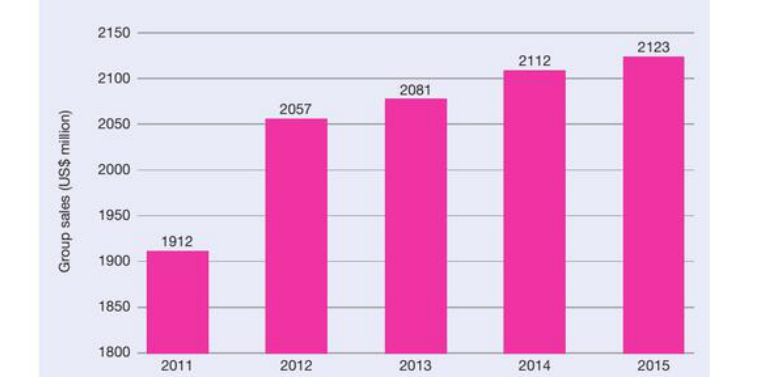
Shangri-La group sales increased from US$1,912 million (2011) to US$2,123 million (2015), a rise of US$211 million. This is evidence of rising sales revenue, not proof that profits also increased.
Size
Small enterprises can often operate effectively as sole traders or partnerships. Very large businesses may need many employees, specialised managers and substantial funding, making a limited company more suitable. The textbook notes that there can be exceptions: no single size automatically determines the correct legal status.
The Need for Finance
Access to capital is often the reason a business changes its ownership structure. One owner may have limited savings; partners can combine their funds; and limited companies can raise share capital. A public limited company can potentially seek funds from a much wider group of investors, although going public brings costs and responsibilities.
Advantage of bringing in owners
More capital may support expansion without depending only on borrowing.
Possible disadvantage
New partners or shareholders gain a voice in the business and may expect a share of returns.
Control
Some entrepreneurs value independence and prefer to make decisions themselves. Taking on partners means decisions may need to be shared. In a limited company, a founder can keep a majority shareholding but must consider other shareholders. For example, holding 51% of the shares may help retain voting control, but the remaining shareholders still have rights.
Limited Liability
Sole traders and ordinary partners have unlimited liability, meaning their personal finances can be at risk if the business cannot pay its debts. A limited company is legally separate from its owners: shareholders are generally liable only for the amount they invested. This protection can be a major reason to incorporate, especially as business risks and debts increase.
| Structure | Finance and control | Liability |
|---|---|---|
| Sole trader | Owner funds and controls the business; simple to manage | Unlimited |
| Ordinary partnership | Partners pool finance and share decisions | Generally unlimited |
| Private limited company | Can issue shares privately; control is shared among shareholders | Limited for shareholders |
| Public limited company | Can offer shares to the public, but faces greater obligations and possible dilution of control | Limited for shareholders |
These are broad features for comparison. The most appropriate choice depends on several factors together, rather than one factor in isolation.
Other Factors
The book also identifies three further influences beyond finance, size and liability.
Type of business activity
A single-person gardening or decorating service may be well suited to a sole trader. Some professional services, such as accountancy or architectural design, may be organised as partnerships. Large manufacturing firms and banks are often limited companies. These are common patterns, not strict rules; a business should choose the structure that suits its own circumstances.
How the owners plan to use profits
Some owners want to take earnings out of the business; others prefer to reinvest profits into more locations, technology or stock. A public limited company may have more shareholders expecting dividends. Owners who want to reinvest a large share of profits and maintain control might prefer to remain private.
Views and interests of stakeholders
Employees, existing shareholders and managers may favour different structures. A founder might wish to retain decision-making power, while investors may wish to make the company public to sell their shares or gain returns. Senior managers and employees may fear losing the original culture and control of a family-run business.
The book notes the examples of Richard Branson’s Virgin and Alan Sugar’s Amstrad, whose companies changed from public limited companies back to private limited companies. A reason was dissatisfaction with having to share control, although buying back shares requires significant funds. These are textbook-era examples.
Check your understanding · Halfway through
Answer these questions before moving to organisational objectives. Reveal the answer after attempting each one.
What is meant by an appropriate form of business ownership?
Show suggested answer
The ownership structure is appropriate when it suits the business’s size, activity, need for finance, owner’s desired control, risk and objectives.
Why might a successful sole trader change to a private limited company?
Show suggested answer
Expansion may require more capital and personal financial protection. A private limited company can sell shares privately to raise funds, and shareholders generally enjoy limited liability. The founder may lose some control.
How could business size influence ownership choice? Use two examples.
Show suggested answer
A one-person gardening service can often be managed as a sole trader; a large manufacturer operating numerous factories may need the capital and management structure of a limited company.
Explain the trade-off between raising capital and maintaining control.
Show suggested answer
New partners or shareholders can contribute capital but usually gain some influence over decisions. Retaining all ownership keeps control but can restrict available finance.
Why does limited liability matter when a business faces large debts?
Show suggested answer
Shareholders in a limited company normally risk the amount they invested rather than being personally responsible for the company’s debts. Sole traders and ordinary partners have unlimited liability.
Using Wu Yang’s example, suggest two reasons she might remain a sole trader.
Show suggested answer
Her tour-guide business is relatively small and she values choosing her own work and keeping control. She does not wish to expand or take responsibility for more staff.
Objectives and the Type of Organisation
Different ownership forms may be appropriate because business owners have different objectives. Choosing the biggest structure is not always the best decision.
| Business situation | Likely objectives | Ownership implication |
|---|---|---|
| Small sole trader | A comfortable lifestyle, independence and sufficient profit | May remain small rather than seek more owners or rapid growth |
| Family business / medium-sized private limited company | Long-term continuity, privacy and retaining control | May decide not to become publicly traded, even if that slows expansion |
| Large multinational | Rapid growth, international sales and larger market share | Often needs access to substantial capital and a management structure suitable for large-scale operations |
As a historical example, the textbook describes McDonald’s plans announced in 2016 to expand its outlets in China, Hong Kong and South Korea. The example illustrates how some multinational businesses place high importance on continued expansion.
Applied example · EshaniBabyGear.com
The textbook traces the changing ownership of a Sri Lankan baby-clothing retailer set up by Eshani Atapattu. She started as a sole trader in 1986 because a small home-based mail-order business needed little outside finance. When she opened a shop, she formed a partnership with a friend, helping to raise LKR 6 million for premises, stock and promotion.
Later, disagreements arose about whether to distribute profits or reinvest them. After the partnership ended, Eshani formed a private limited company. The textbook states that she kept 70% of shares, her mother bought 20%, and two staff members bought the remaining 10%. This arrangement brought in capital while allowing Eshani to retain majority control.
When a possible larger expansion required an estimated LKR 400 million, becoming a public limited company was considered as a way to raise much more equity. However, it would bring a greater risk of losing control to outside shareholders. These figures describe the book’s historical case, not current business performance.
Why go public?
Potentially raises large amounts of equity to fund multiple new shops without borrowing all of the money.
Why remain private?
Protects concentrated control and avoids some costs and demands of having a wider group of shareholders.
When asked which structure is most appropriate, identify what the business needs, explain the benefits and drawbacks of at least two choices, and conclude by saying which factor matters most in that specific situation.
End-of-chapter understanding questions
These questions progress from knowledge and understanding to business application and evaluation. Try them before opening the suggested responses.
Identify five factors from the chapter that influence the choice of ownership.
Show suggested answer
Growth, business size, need for finance, desire for control and limited liability. The type of activity, profit use, stakeholders and objectives also matter.
A self-employed gardener has little capital and wants full independence. Which form is likely to suit this business, and why?
Show suggested answer
A sole trader is likely to be appropriate because set-up is simple and the owner retains decision-making control. This also leaves the owner with unlimited liability, so risk should be considered.
Explain two reasons why a partnership might be preferable to operating alone.
Show suggested answer
Partners can combine finance and skills and share workload. However, shared ownership may cause conflict and ordinary partners can have unlimited liability.
Why might a large manufacturing business be more suited to a limited company than a sole trader?
Show suggested answer
Large-scale production often requires substantial finance, many workers and organised management. A limited company may attract more capital while offering shareholders limited liability.
Distinguish between changing ownership to raise capital and changing ownership to protect personal assets.
Show suggested answer
Raising capital concerns bringing in additional money, for example from new shareholders. Protecting personal assets concerns limiting owners’ exposure to business debts through incorporation. A change may achieve both.
What do the textbook’s Shangri-La sales figures suggest about the business between 2011 and 2015?
Show suggested answer
The historic graph shows group sales increasing from US$1,912 million in 2011 to US$2,123 million in 2015, a rise of US$211 million. This supports growth in sales, although the graph alone does not show profit.
Using Eshani’s business, explain why a partnership initially helped but later became unsuitable.
Show suggested answer
A partner brought capital and shared the work, enabling the shop to expand. Later they disagreed about distributing profits versus reinvesting them, highlighting the cost of shared control.
Eshani held 70% of her private limited company’s shares. What does this suggest about control?
Show suggested answer
Holding a majority of shares generally gives her strong voting control, although she must still observe company law and consider other shareholders. It does not mean she personally owns company assets.
Why might a business that wants to reinvest profits prefer to remain a private limited company rather than become public?
Show suggested answer
A private company can often retain more concentrated control and avoid pressure from a larger shareholder base for dividends. However, access to very large amounts of new equity finance is more restricted.
Assess whether Eshani should form a public limited company to raise LKR 400 million for more shops.
Show suggested answer
Going public could raise substantial equity for expansion and provide limited liability, but flotation costs money and new investors could dilute control and demand dividends. A justified decision depends on expansion forecasts, risk, other finance sources and Eshani’s desire to remain in control.
Evaluate the statement: “The largest possible form of ownership is always the best for a growing business.”
Show suggested answer
Disagree as a general rule. Greater access to funds and specialist management can support expansion, but larger structures bring more formalities, costs and possible loss of control. The most appropriate structure depends on the scale, finance required, risk and owners’ objectives.
Chapter 6 recap
There is no single best ownership structure for all businesses. A good choice balances growth, size, access to finance, control, personal financial risk, business activity, profit use, stakeholder interests and owners’ objectives. Reconsider the choice as circumstances change.
Based on Chapter 6, Appropriateness of Different Forms of Ownership (printed pp. 44–48) of the user-supplied Pearson Edexcel International GCSE (9–1) Business Student Book by Rob Jones (Pearson). Notes, examples, comparative tables, questions and answers are original adaptations of the supplied chapter. The Shangri-La sales graph is cropped from the supplied book and depicts historic data. IGCSE360 is not affiliated with Pearson.